
Menswear Wedding Outfit: Dressing With Presence, Not Excess
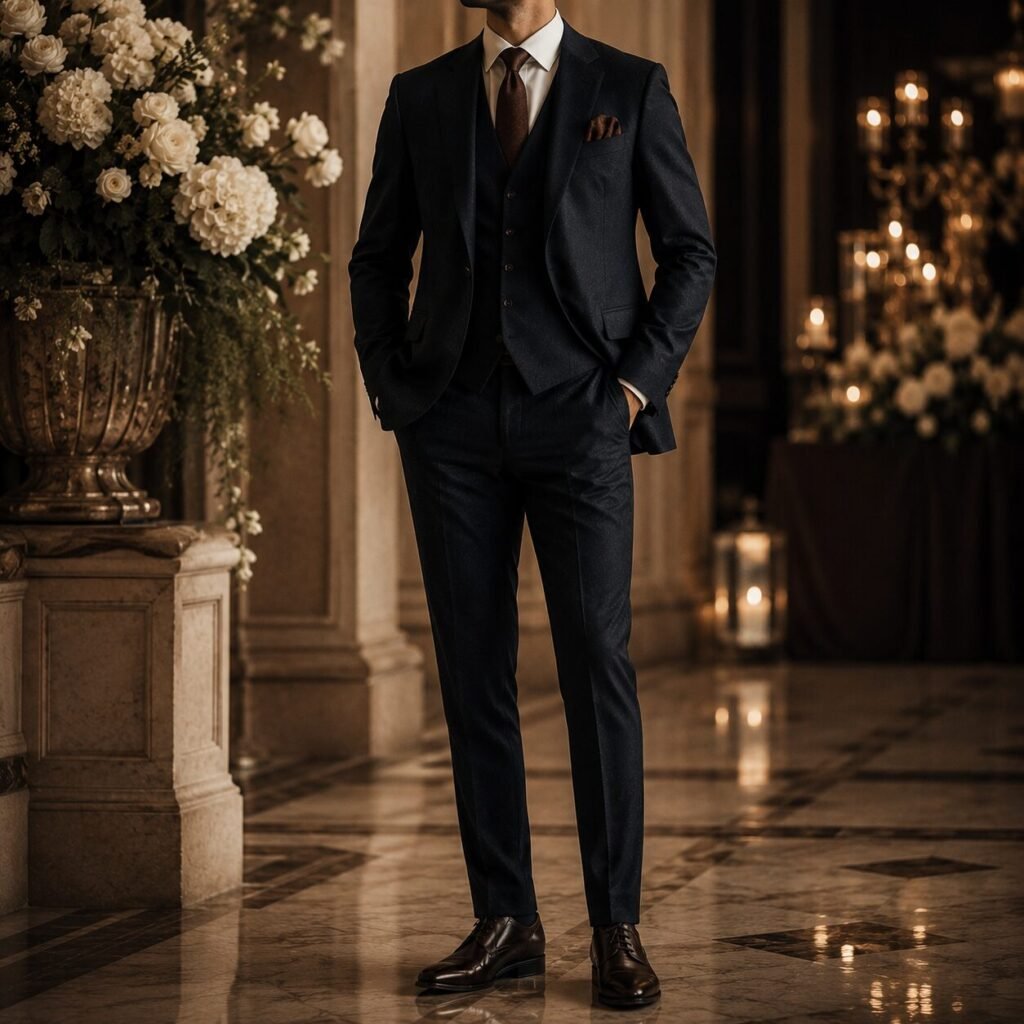
A wedding is one of the few occasions where a man’s clothes are expected to say something before he does. Not necessarily something loud. Not necessarily something extravagant. But something considered. The modern menswear wedding outfit has moved well beyond the predictable formula of a dark suit, white shirt and polished shoes. Indian weddings, in particular, have created a fascinating space where traditional clothing, European tailoring, contemporary silhouettes and luxurious fabrics can exist together. A Bandhgala can be as appropriate as a three-piece suit. A linen suit can look more sophisticated than a heavily embellished outfit when the setting calls for restraint. A double-breasted jacket can bring presence to an evening reception, while a beautifully cut navy suit can remain completely understated. The difference is rarely about how much is being worn. It is about how deliberately it is worn. The strongest wedding dressing understands the occasion, respects the setting and still leaves enough room for the man wearing it to look like himself. The Difference Between Dressing Up and Dressing Well There is an important distinction between dressing formally and dressing well. Formal clothing can be purchased. Good dressing requires judgement. A wedding provides plenty of temptation to overdo things. Rich colours, intricate embroidery, statement accessories and elaborate fabrics can all have their place, but combining too many of them can make an outfit feel designed around the clothing rather than the person. Good tailoring works differently. The shoulder sits naturally. The jacket follows the body without constricting it. The trousers have the right break. The fabric has enough depth to catch light without becoming distracting. Accessories complete the outfit rather than competing with it. This is why fit, proportion and fabric often have a greater visual impact than ornamentation. A beautifully constructed navy suit in fine wool can have more presence than an overly decorated garment simply because everything about it is in balance. That principle is particularly relevant when choosing a menswear wedding outfit for a modern Indian celebration. The Modern Indian Wedding Has Changed Menswear Indian weddings are no longer confined to one venue, one ceremony or one dress code. A wedding may begin with a daytime Haldi, move into an afternoon Mehendi, transition into an evening Sangeet and conclude with a formal reception. Destination weddings introduce another layer, with outdoor ceremonies, resort dinners and formal evening celebrations often taking place within the same weekend. This evolution has expanded men’s wardrobes. The modern Indian wedding wardrobe can include tailored Western suits, three-piece suits, double-breasted tailoring, Bandhgalas, Sherwanis, Indo-Western silhouettes, linen tailoring and velvet evening jackets. The interesting part is not choosing between Indian and Western clothing. It is understanding how each silhouette communicates differently. A groom might choose a Bandhgala for the ceremony and transition into a sharply cut tuxedo for the reception. A wedding guest might wear a lightweight suit for a daytime celebration and a darker, more structured ensemble in the evening. The possibilities are broader, but the principle remains the same: dress for the moment, not simply for the photograph. When the Suit Becomes Part of Indian Wedding Dressing The suit has earned a distinctive place in contemporary Indian weddings because it provides structure without requiring excessive decoration. A well-tailored suit can work particularly well when the wedding calls for formal sophistication rather than traditional ceremonial dress. The three-piece suit, for example, introduces additional formality through the waistcoat. A double-breasted jacket creates a stronger architectural silhouette. A dinner suit can bring restraint to an evening reception. And then there is the Bandhgala. With its closed collar and structured silhouette, the Bandhgala occupies a particularly interesting position between Indian heritage and modern tailoring. The Bandhgala’s evolution into modern formalwear explores how this distinctive silhouette has evolved while retaining its cultural identity. The appeal lies in its ability to feel unmistakably Indian without relying on excessive embellishment. When the Silhouette Says More Than the Embellishment Some wedding outfits are memorable because of their decoration. The best ones are often remembered because of their silhouette. The Two-Piece Suit The two-piece is clean, versatile and understated. It allows the fabric, cut and accessories to establish the personality of the outfit. For a wedding guest, it can be one of the most effective choices because it can be formal without appearing overly ceremonial. The Three-Piece Suit The waistcoat changes the visual balance of the outfit. It creates a stronger central line through the torso and gives the ensemble a more ceremonial character. This makes it particularly effective for grooms, close family members and formal evening celebrations. For a more detailed comparison of the two approaches, see two-piece and three-piece wedding suits. The Double-Breasted Suit The overlapping front and broader visual structure make a double-breasted suit more assertive. It works particularly well for men who appreciate classic tailoring but want something with more presence than a conventional single-breasted jacket. The Bandhgala The closed collar immediately changes the character of the outfit. Rather than using a lapel to frame the shirt and tie, the Bandhgala creates a continuous vertical line around the neck. This gives it a distinctive Indian identity while retaining the precision of structured tailoring. The Tuxedo For a black-tie reception, few garments communicate evening formality as effectively as a properly constructed tuxedo. Its appeal comes from restraint: a clean jacket, refined lapels, formal trousers and carefully selected accessories. The common thread between all of these styles is not extravagance. It is proportion. Fabric Is the Quietest Statement You Can Make If silhouette determines the architecture of a wedding outfit, fabric determines its character. The same suit in different fabrics can look like two completely different garments. Wool creates structure and refined drape. Tropical wool introduces greater breathability for warmer conditions. Linen has a relaxed texture and natural movement. Silk blends can introduce subtle luminosity, while velvet brings depth and richness to evening dressing. For Indian weddings, fabric selection becomes particularly important because climate can change dramatically between venues and seasons. Lightweight wool can be an especially
