
Types of Suits for Men: A Complete Guide to Modern Suit Styles
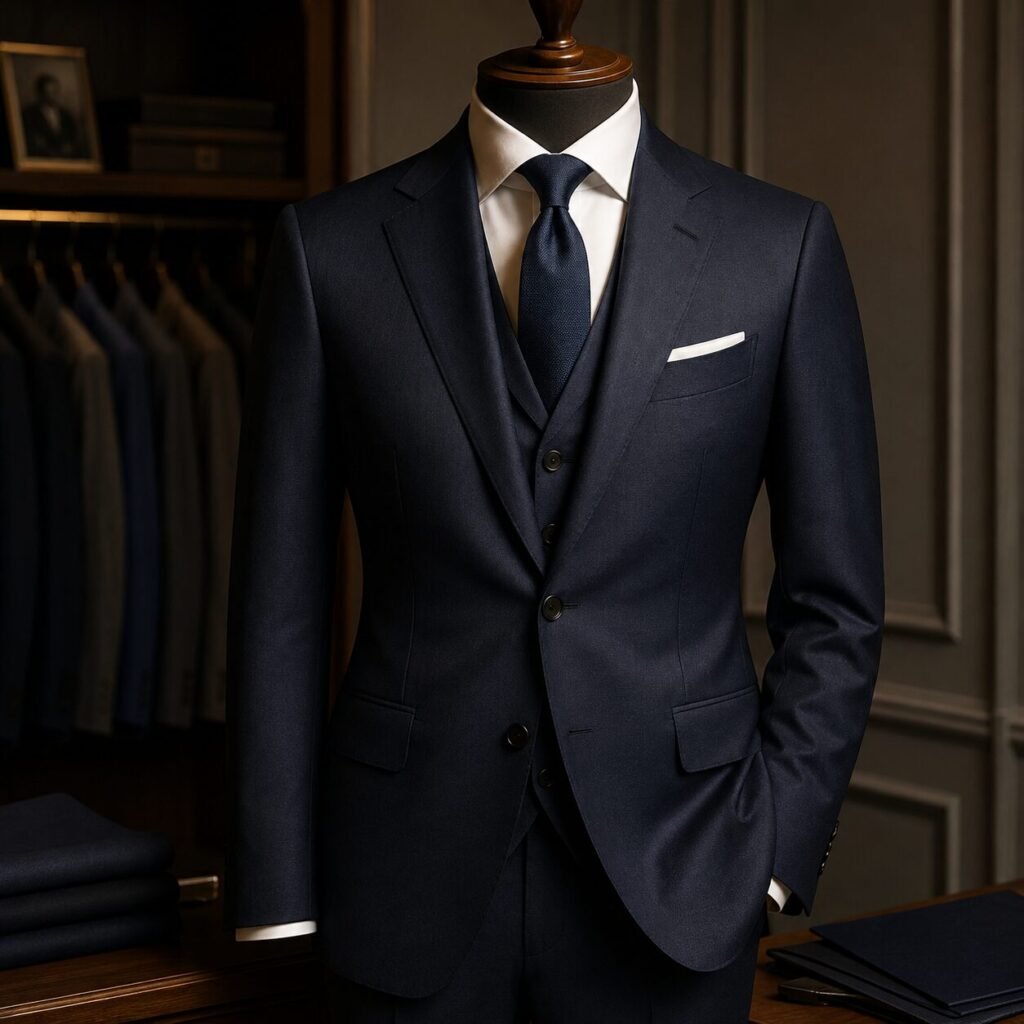
A suit is rarely just a suit. The difference between a two-piece worn to a business meeting, a three-piece chosen for a wedding, a double-breasted jacket for an evening occasion, and a Bandhgala for a formal Indian celebration goes far beyond the number of buttons or layers. Each has its own purpose, proportion, level of formality, and visual language. Understanding the types of suits for men makes it easier to build a wardrobe that works across occasions rather than accumulating suits that all serve the same purpose. The most useful way to approach suit styles is not simply by naming them, but by understanding when they work, how they should fit, what fabrics suit them, and how they can be made relevant to modern Indian menswear. This guide breaks down the major suit styles worth knowing, from foundational two-piece tailoring to three-piece suits, double-breasted styles, tuxedos, Bandhgalas, and seasonal tailoring. What Defines a Suit Style? Before looking at individual styles, it helps to understand what actually changes from one suit to another. A suit can vary according to its number of pieces, jacket construction, button configuration, lapel shape, silhouette, fabric, and intended formality. For example, a two-piece and three-piece suit differ primarily because of the waistcoat. A single-breasted and double-breasted suit differ in their front construction and button arrangement. A tuxedo differs not simply because it is black, but because of details such as satin-faced lapels and trousers designed for black-tie dressing. This distinction matters because the terms are often mixed together. A suit can simultaneously be a three-piece, double-breasted, wool suit with peak lapels. So, rather than thinking of suit styles as completely separate categories, think of them as different elements that can be combined to create a particular look. 1. The Two-Piece Suit The two-piece suit is the foundation of most men’s tailoring wardrobes. It consists of a jacket and matching trousers, without a waistcoat. Its simplicity is precisely what makes it so versatile. A well-cut navy or charcoal two-piece can move from the office to a formal dinner with relatively minor changes in the shirt, tie, and footwear. When to Wear a Two-Piece Suit A two-piece works particularly well for: For a first serious suit, the two-piece is difficult to beat because it offers maximum versatility. The key is choosing a fabric and colour that do not restrict its use. A navy wool suit, for example, can be dressed conservatively for business or styled more expressively for an evening occasion. For men building a formal wardrobe, Shubham Shinde’s suit collection offers a useful starting point for exploring structured tailoring and different silhouettes. 2. The Three-Piece Suit A three-piece suit adds a waistcoat to the traditional jacket-and-trouser combination. That additional layer changes the character of the entire outfit. The waistcoat creates a continuous visual line through the torso and gives the wearer a more formal, composed appearance. It also provides an advantage at events where the jacket may occasionally be removed—the outfit still retains much of its intended structure. When Should You Wear a Three-Piece Suit? Three-piece suits are particularly effective for: Fabric and colour matter enormously here. A dark wool three-piece can appear distinctly formal, while a lighter fabric can create a more relaxed wedding look. If you’re deciding between the two, our detailed comparison of 2-piece and 3-piece wedding suits can help you understand which works better for different wedding settings. 3. The Single-Breasted Suit Among the different types of suits for men, the single-breasted suit is arguably the most versatile. It features one column of buttons and a relatively clean front. Depending on the button stance, lapel width, shoulder construction, and cut, it can range from relaxed to highly formal. The most common configurations include two-button and three-button jackets, with the two-button style remaining particularly adaptable to contemporary wardrobes. Why Single-Breasted Suits Remain Essential Their versatility makes them suitable for almost every man’s wardrobe. A well-tailored single-breasted suit can work for: The important consideration is not simply the number of buttons but the overall proportion of the jacket. A narrow lapel, heavily suppressed waist, and short jacket create a very different impression from a broader lapel, natural shoulder, and longer silhouette. 4. The Double-Breasted Suit A double-breasted suit has overlapping front panels and two parallel columns of buttons. It creates a stronger silhouette than a conventional single-breasted jacket and has historically been associated with confident, formal dressing. Modern double-breasted tailoring, however, does not have to look old-fashioned. Contemporary proportions, cleaner shoulders, and carefully balanced button placement can make the style remarkably sophisticated. When to Wear a Double-Breasted Suit Consider one for: The double-breasted jacket works particularly well when the wearer embraces its structure rather than trying to make it look like a single-breasted suit. The lapels, button stance, and jacket length need to work together. Poor proportions can make the garment look bulky, while precise tailoring gives it authority. 5. The Tuxedo A tuxedo occupies a different category from an ordinary formal suit. Designed for black-tie occasions, the classic tuxedo is distinguished by details such as satin-faced lapels, matching satin detailing on the trousers, and formal evening accessories. The traditional combination includes: A tuxedo is therefore not simply a “fancier black suit.” Its purpose is specifically tied to evening formalwear and black-tie dress codes. Using a standard business suit in place of a tuxedo can make an outfit appear underdressed, particularly at events where black tie is explicitly requested. For a detailed explanation of how formal dress codes differ, authoritative menswear guides such as are useful supplementary references. 6. The Bandhgala Suit Few of the types of suits for men carry as much cultural character as the Bandhgala. Recognised by its closed or stand collar and structured front, the Bandhgala occupies a distinctive position in Indian formalwear. It combines the discipline of tailoring with a silhouette deeply associated with Indian sartorial heritage. It is particularly effective for: The beauty of the modern Bandhgala lies in its restraint. Rather than relying on heavy ornamentation, a
Bandhgala Jacket for Men: Inside the Construction of India’s Most Structured Jacket
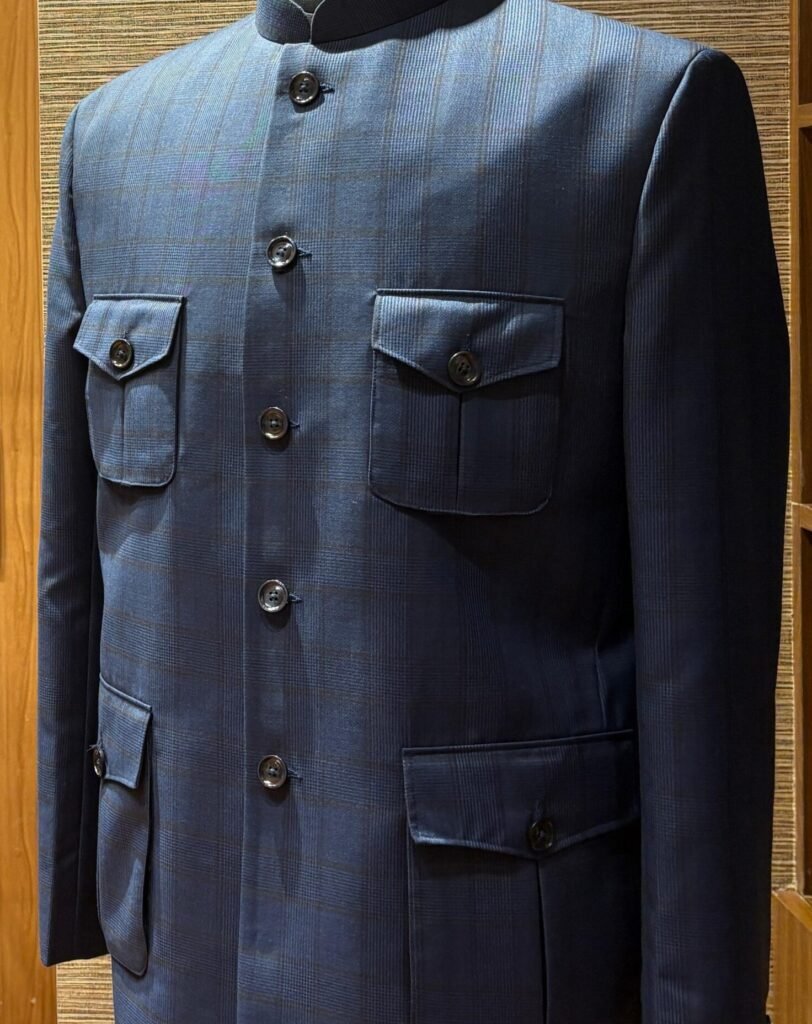
Walk into any room where Indian men are dressed for a serious occasion and you will know a Bandhgala when you see one. There is nothing else quite like it – the closed collar buttoned to the throat, the clean vertical button line, the structured silhouette that carries its own formality without requiring a tie, a lapel, or any borrowed Western context to complete it. It simply stands on its own. What most men do not know is what is happening inside that jacket to make it look and hold the way it does. A bandhgala jacket for men is one of the most technically demanding garments in Indian tailoring. Its defining feature the stand collar requires a precision of construction that a Western jacket’s open lapel does not. Its silhouette depends on an internal structure that is built by hand, layer by layer, before the outer fabric is ever touched. And the difference between a Bandhgala that looks composed from the first hour to the last and one that begins to lose its shape by the evening is almost entirely in how that internal construction was done. This is an inside account of how a Bandhgala jacket is made the materials, the sequence, the hand-work, and the construction decisions that separate a jacket built to last from one that merely looks the part on the hanger. Quick Answer: What Is a Bandhgala Jacket for Men? A Bandhgala jacket for men is a structured formal jacket of Indian origin, defined by a high stand collar – bandh gala translates literally to “closed neck” that buttons completely to the throat, a vertical button placket from collar to hem, and a fitted, suppressed-waist silhouette. It is also known as a Jodhpuri jacket when paired with matching trousers as a complete suit. Unlike a Western jacket, it requires no tie, no dress shirt collar, and no lapel the collar and front placket together create a complete, self-contained formal identity. It is the most structurally demanding jacket in Indian tailoring and, when made correctly, one of the most enduring. Where the Bandhgala Comes From: A Construction History The Bandhgala’s origins sit at the precise intersection of two tailoring traditions. <cite index=”6-1″>It blends the structure of a Western suit jacket with the rich heritage of Indian attire</cite> an inheritance from the period when Indian royal courts absorbed British military tailoring conventions and transformed them into something entirely their own. The result was a jacket that kept the structured chest and suppressed waist of British military dress but replaced the open lapel and collar with India’s own closed-neck tradition. The Jodhpur courts of Rajasthan are most frequently credited with its formal codification hence the alternative name, Jodhpuri suit though similar closed-collar structured jackets existed across Mughal and Maratha court dress in earlier centuries. What makes this history relevant to construction is that the Bandhgala has always been a jacket built for authority and ceremony not for casual adaptation or fast production. <cite index=”6-1″>Its defining feature, the bandh gala, gives the garment its clean lines and stately appearance</cite> and those clean lines depend entirely on the precision of what is built inside. The Anatomy of a Bandhgala: What Is Actually Inside Before discussing the construction sequence, it helps to understand what a properly made Bandhgala jacket actually consists of because this is where most mass-produced and ready-to-wear versions cut corners, and where those corners become visible within the first season of wear. The outer fabric is what you see – the wool, silk blend, velvet, or suiting fabric that gives the jacket its colour and surface character. The canvas interlining is the structural foundation of the jacket – a layer of woven horsehair and cotton canvas stitched to the inside of the front panels that creates the chest shape, holds the button line upright, and gives the jacket its ability to mould to the body over time with wear. In a fused jacket the construction method used in fast production – this layer is replaced with a heat-bonded synthetic interfacing that is cheaper and faster but bubbles, delaminates, and loses its structure with dry cleaning and wear. A properly made Bandhgala uses full canvas or half canvas construction never fused. The collar interlining is specific to the Bandhgala and has no equivalent in Western jacket construction. The stand collar requires its own internal structure – a shaped, stiffened interlining that holds the collar upright, flush against the neck, and completely even in height around the entire circumference. This is the most technically demanding single component in the jacket, and the one that reveals the quality of construction most immediately when it fails. The lining covers the internal construction and allows the jacket to slide on and off easily. In a bespoke Bandhgala, the lining is cut with ease allowances that move with the body rather than pulling against it. The padding and shoulder construction shapes the shoulder line – the canvas roll, the shoulder pad if used, and the sleeve head wadding that fills the top of the sleeve and creates the smooth shoulder-to-sleeve transition visible from the outside. The Construction Sequence: How a Bespoke Bandhgala Is Built Stage 1: Measurement and Pattern Drafting A bespoke Bandhgala begins not with fabric but with measurements and more measurements than a Western jacket requires, because the stand collar adds a critical dimension that an open lapel does not: the neck circumference, the collar height preference, the angle of the neck from the shoulder, and the precise point at which the collar meets the front button placket must all be calculated and drafted into the pattern before cutting. The front button placket of a Bandhgala is a straight, unbroken vertical line from throat to hem. Any deviation in the cut any pull, any curve, any asymmetry is immediately visible because there is no lapel to soften or conceal it. The pattern must be drafted with a precision that leaves no margin for the kind of small errors that disappear
