
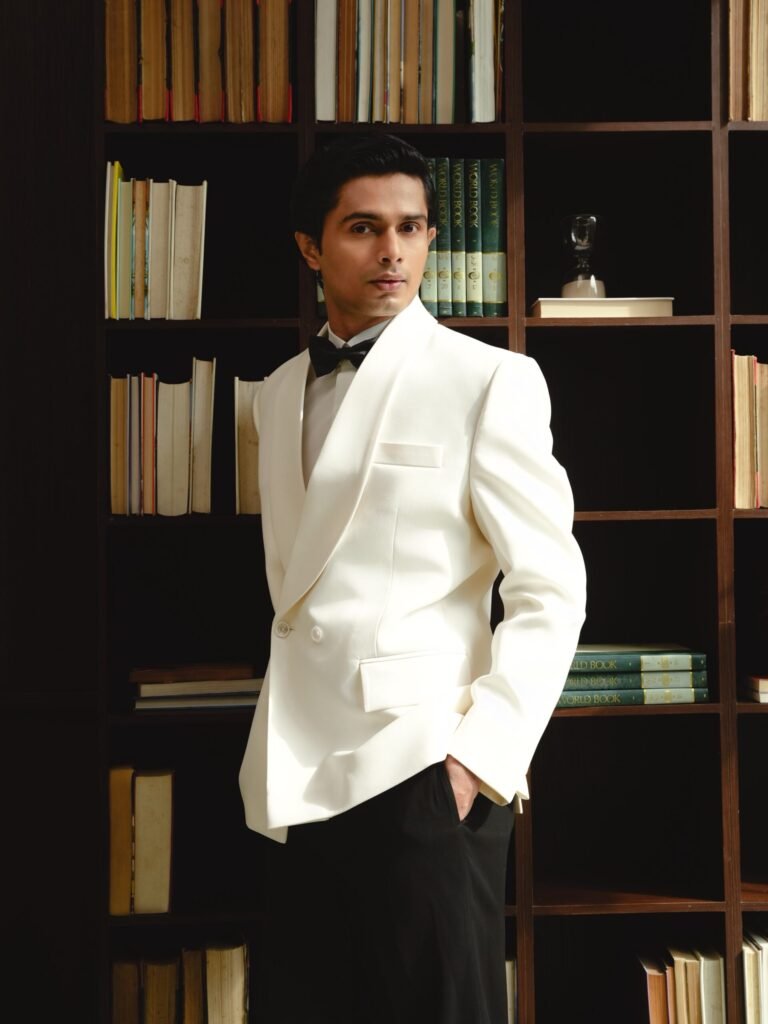
A white tuxedo suit for men is a formal evening jacket — traditionally in ivory or off-white — worn with black trousers, a black bow tie, and satin lapel facing, following the same construction as a classic black tuxedo but reversing the jacket colour for a standout statement look. It’s correct for black-tie events held in warm climates or evening hours, for grooms, and for high-visibility occasions like receptions, galas, and summer weddings. It is not interchangeable with a plain white suit, which has no satin lapels and is worn for daytime or business settings.
As a tailor who cuts formal wear out of my atelier in Thane, this is one of the most-requested pieces every wedding and event season — and also one of the most misunderstood. Here’s what actually separates a white tuxedo from a white suit, and how to get the fit right.
What Defines a White Tuxedo (Not Just a White Suit)
A genuine tuxedo — white or black — is identified by three construction details, not by colour alone:
- Satin or grosgrain lapels — either peak or shawl, faced in a contrasting silky material. This is the single feature that separates a tuxedo from a suit.
- Satin-covered buttons matching the lapel facing.
- A single satin stripe down the trouser leg, usually black trousers paired with the white jacket.
If a garment is white top to bottom with plain lapels and no satin detailing, it’s a white suit, not a white tuxedo — correct for daytime events, not for black-tie evening wear.
White Tuxedo vs. Black Tuxedo vs. White Suit
| Feature | White Tuxedo | Black Tuxedo | White Suit |
|---|---|---|---|
| Lapel | Satin-faced (peak/shawl) | Satin-faced (peak/shawl) | Plain, no satin |
| Trousers | Black, satin stripe | Black, satin stripe | White or ivory, matching |
| Dress code | Black tie (evening) | Black tie (evening) | Business/day formal |
| Best setting | Evening receptions, gala, groom | Formal evening events | Daytime wedding, summer business |
| Standout factor | High — contrast look | Classic, understated | Moderate |
When to Wear a White Tuxedo
- Evening weddings and receptions, especially warm-weather or destination weddings where white reads lighter and more seasonally appropriate than black.
- Black-tie or black-tie-optional galas held after 6 PM, where the dress code expects satin lapels and bow tie.
- Groom’s attire for a reception or sangeet, when he wants to visually stand apart from groomsmen in black tuxedos.
- Cruise, resort, or outdoor evening formals, where white suits the setting without breaking black-tie convention.
It is generally not worn to daytime formal events, office functions, or traditional ceremonial functions where sherwanis or Bandhgalas are the cultural norm — a white tuxedo belongs specifically to Western black-tie evening contexts.
Fabric and Fit Considerations
For Indian climates, I steer most clients toward a wool-mohair blend or a lightweight wool-silk mix — both hold a crisp ivory-white shade without the fabric looking flat or overly stiff under evening lighting. Pure white can wash out under flash photography, so I often recommend a soft ivory or off-white shade instead of stark white; it photographs warmer and is more forgiving on most skin tones.
Fit details that matter most on a white tuxedo, because the lighter colour makes any looseness or pulling far more visible than on black:
- A close, clean shoulder line with no divoting at the sleeve head.
- A jacket length that just covers the seat, standard for tuxedo proportions.
- Trouser break kept minimal to maintain the sharp, formal silhouette.
How We Tailor It at the Atelier
Every white tuxedo order starts with fabric selection, since the shade of white and the weight of the cloth decide how the final garment photographs and drapes — this is not a detail I leave to a swatch book alone; I review it against the client’s skin tone and the event’s lighting. From there we move to a first fitting for shoulder and chest shaping, followed by lapel and trouser finishing at the final fitting. Most white tuxedo orders take two to three weeks from first measurement to delivery, depending on fabric sourcing and season.
Frequently Asked Questions
Is a white tuxedo appropriate for a daytime wedding? Not traditionally. A white tuxedo follows black-tie evening convention; for daytime formal events, a white suit without satin lapels is the correct choice.
Can I wear a white tuxedo jacket with white trousers instead of black? It’s possible for a fully white look, but it moves away from classic black-tie convention and reads as more fashion-forward than formal. Black trousers with a satin stripe remain the traditional and safest pairing.
What shirt and accessories go with a white tuxedo? A classic white tuxedo shirt with a wing or turndown collar, a black satin bow tie, and black formal shoes — the same accessory rules as a black tuxedo apply.
Does a white tuxedo suit all skin tones? Most skin tones suit an off-white or ivory shade better than stark white, which can appear flat under bright or flash lighting. I recommend testing fabric swatches against skin tone before finalising.
How is a white tuxedo different from a white Nehru jacket or Bandhgala? A white tuxedo is a Western black-tie garment with satin lapels and bow tie, built for evening formal events. A white Bandhgala or Nehru jacket has a closed mandarin collar, no satin lapels, and belongs to Indian formal and ceremonial dress codes instead.
In short: a white tuxedo suit for men is a satin-lapelled, black-tie evening jacket in white or ivory, paired with black trousers and a black bow tie — distinct from a plain white suit, and best suited to evening weddings, galas, and receptions rather than daytime or traditional ceremonial events.
Ready for a white tuxedo built to your measurements? Book a consultation or browse our wedding suit collection to see
