Indian menswear has undergone a remarkable transformation, one shaped not only by tradition but also by historical influence. Among the most defining shifts was the introduction of safari suits, a garment born out of colonial necessity that would go on to shape an entire era of dressing.
What began as a practical solution for tropical climates gradually evolved into a symbol of authority and everyday formalwear. However, as tastes refined and expectations changed, Indian menswear moved beyond utility toward precision, structure and craftsmanship.
This journey from safari suits to tailored elegance reflects a broader evolution in how men perceive style: not just as clothing but as identity.
Colonial India And The Birth Of Safari Suits
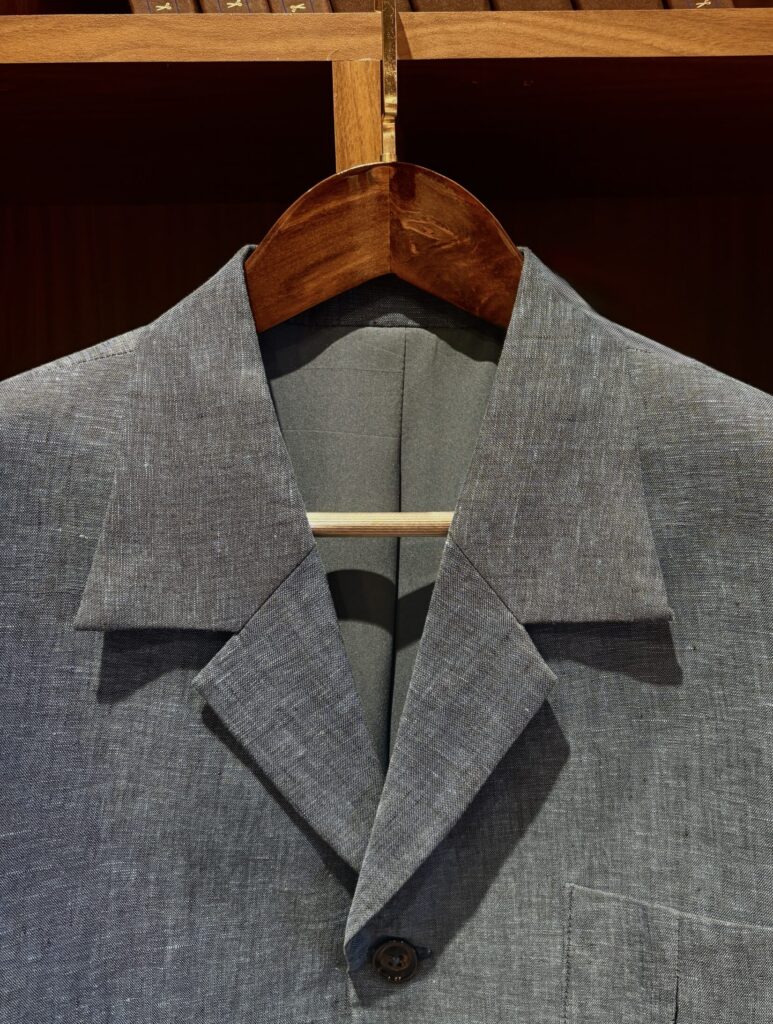
The origins of safari suits can be traced back to British colonial rule in India. Designed for officers, administrators and explorers, these garments were built to withstand harsh climates while maintaining a sense of authority.
Crafted primarily from cotton or lightweight fabrics, safari suits featured:
- Multiple functional pockets
- Relaxed silhouettes for ease of movement
- Breathable construction suited for heat
- Neutral tones reflecting practicality
Their design drew heavily from military uniforms, blending functionality with a subtle assertion of control and hierarchy.
Safari Suits In Indian Society
As colonial influence expanded, safari suits were gradually adopted by Indian elites, government officials and professionals. What was once a colonial uniform transitioned into a mainstream garment.
During the post-independence decades, particularly the 1970s and 1980s, safari suits became synonymous with:
- Bureaucratic authority
- Political identity
- Professional attire for middle and upper classes
Their accessibility and practicality made them widely popular across India, embedding them deeply into the cultural fabric of menswear.
The Limitations Of Safari Suits In Modern Menswear
Despite their historical significance, safari suits began to lose relevance as fashion evolved. Their relaxed construction, once considered practical, came to be seen as lacking refinement.
Key Limitations:
- Absence of structured tailoring
- Limited adaptability across formal occasions
- Perception of outdated styling
- Lack of sharp silhouette
As global exposure increased, the demand shifted toward garments that offered both comfort and visual precision—something safari suits struggled to deliver.
The Rise Of Structured Tailoring In India
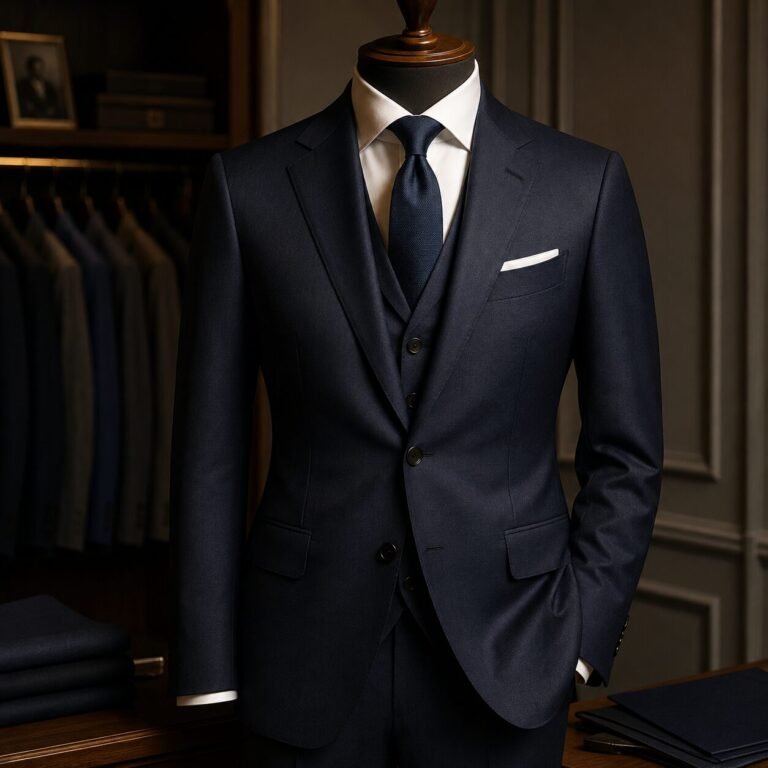
With the globalization of fashion and increased awareness of international tailoring standards, Indian menswear began to embrace structure.
This shift marked a clear departure from the relaxed nature of safari suits, introducing:
- Defined shoulder construction
- Suppressed waistlines
- Cleaner silhouettes
- Greater emphasis on fit
The modern Indian man began to value garments that enhanced posture and presence, rather than merely serving functional needs.
The Emergence Of The Bandhgala And Refined Formalwear
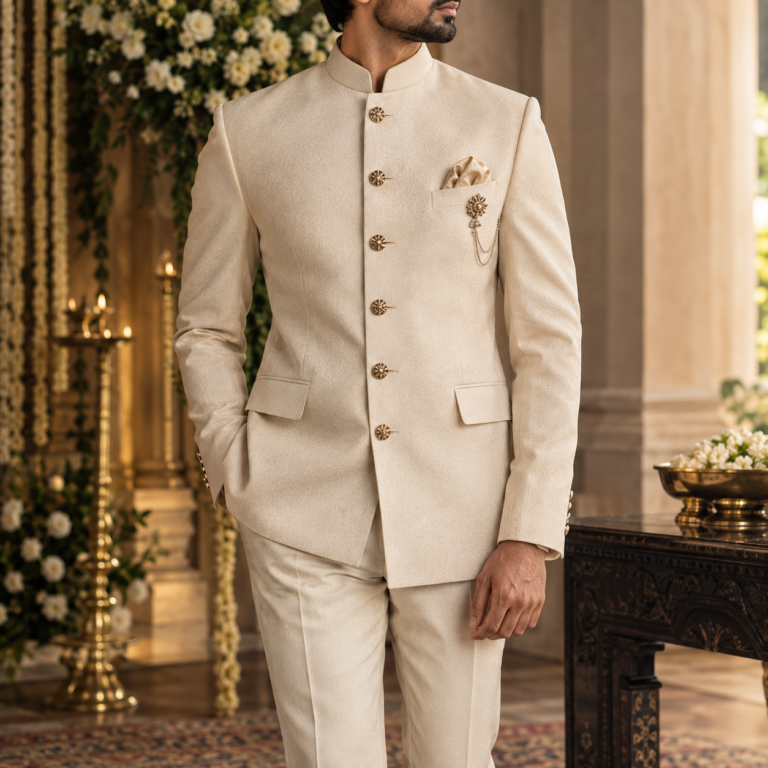
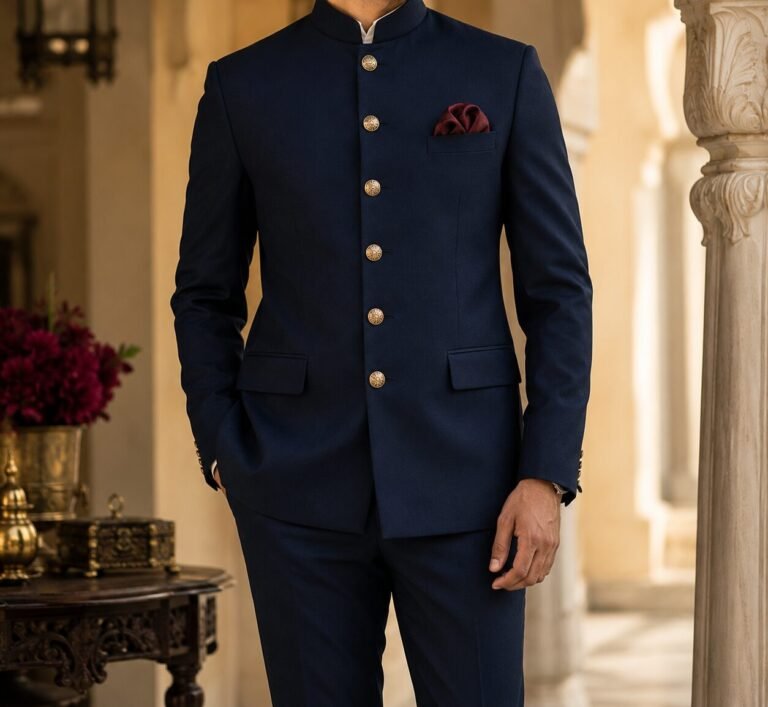
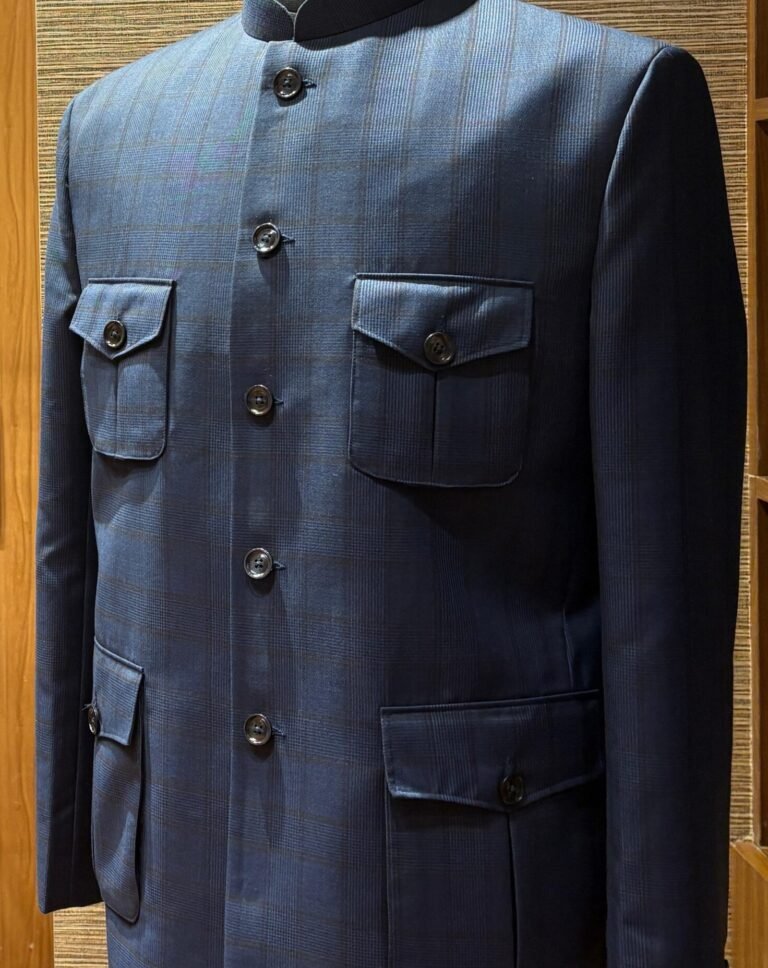
As structured tailoring gained prominence, garments like the Bandhgala emerged as powerful alternatives to safari suits. Combining Indian heritage with disciplined tailoring, the Bandhgala offered:
- A structured silhouette
- Cultural authenticity
- Versatility across formal occasions
Unlike the relaxed nature of safari suits, the Bandhgala emphasized precision, making it a preferred choice for those seeking refined elegance.
Fabric Evolution: From Utility To Luxury
The transformation of Indian menswear was not limited to silhouettes—it extended deeply into fabric selection.
Then:
- Cotton-dominant safari suits for practicality
Now:
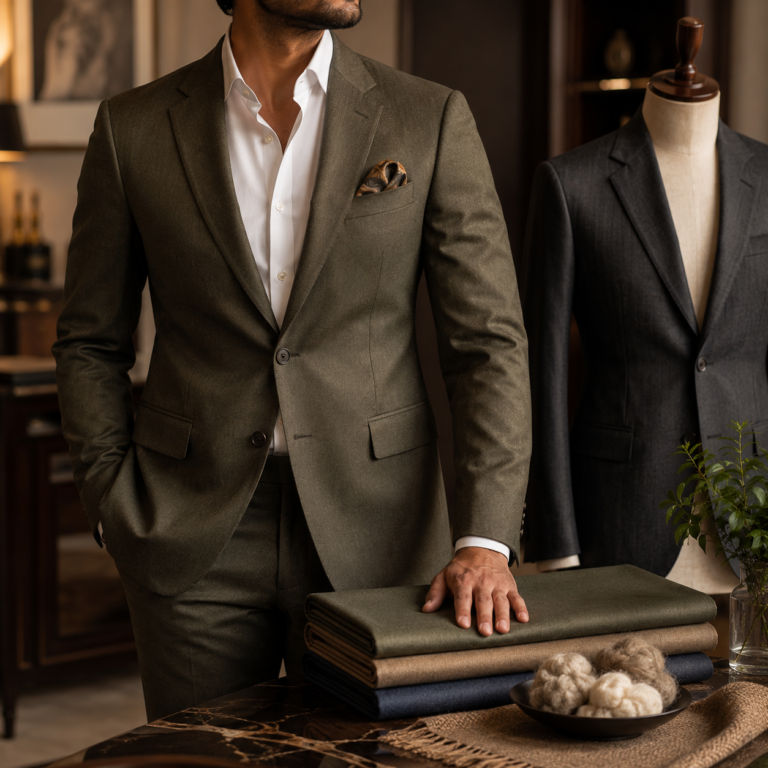
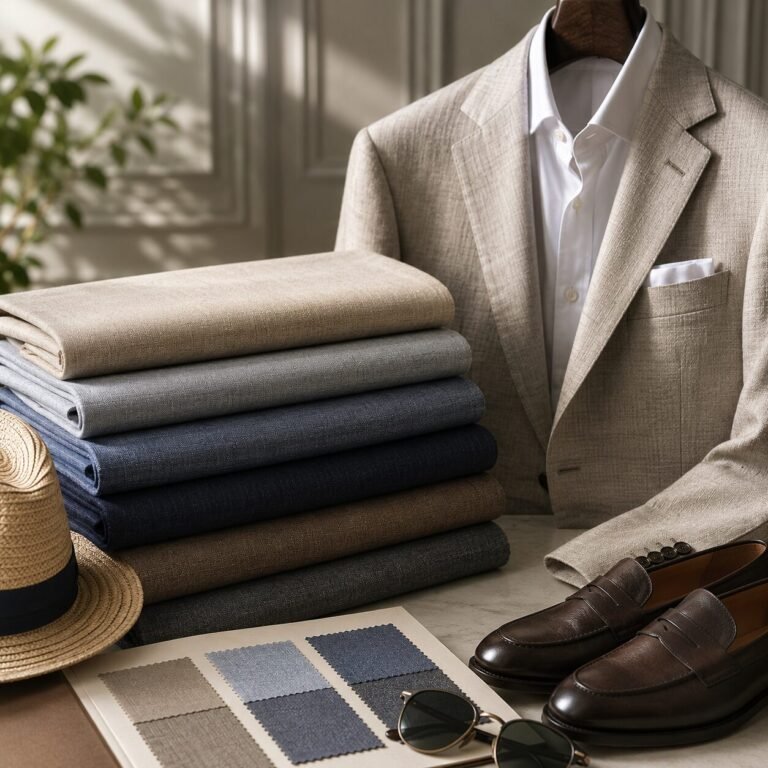
- Tropical wool for breathability and structure
- Merino wool for year-round comfort
- Wool blends for refined texture
Modern fabrics allow garments to maintain structure while adapting to climate, bridging the gap between comfort and sophistication.
Contemporary Menswear: Precision Over Practicality
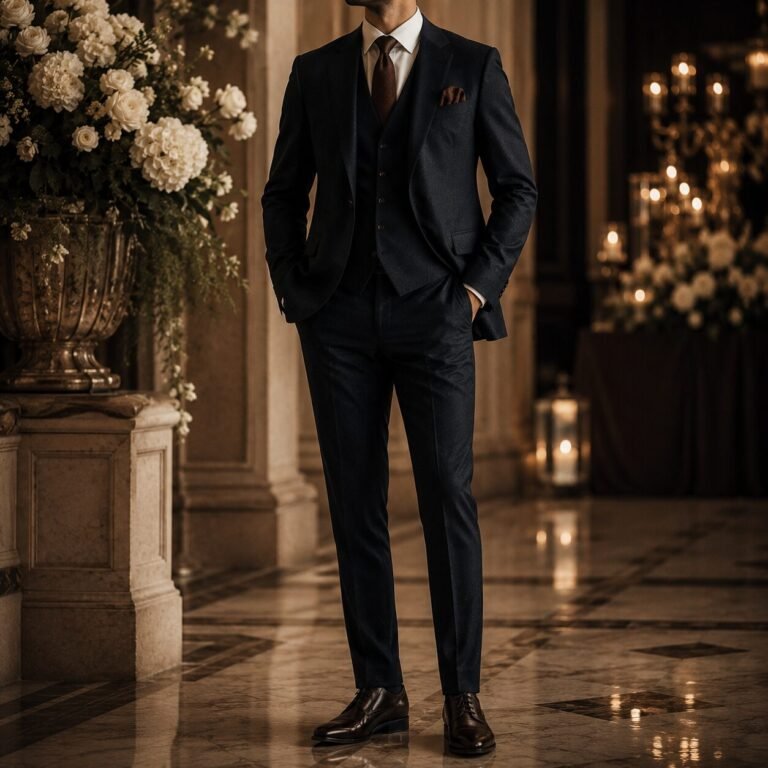
Today, menswear is defined by intentional choices. The focus has shifted from purely functional garments like safari suits to pieces that reflect individuality and discipline.
Key characteristics of modern menswear include:
- Precision tailoring
- Structured silhouettes
- Fabric intelligence
- Occasion-based dressing
At Shubham Shinde, this philosophy is brought to life through garments that prioritize craftsmanship, proportion, and material integrity offering a clear evolution from the era of safari suits to contemporary structured elegance.
For a deeper exploration of modern tailored garments, you can explore the collection here
Safari Suits in Today’s Context
While no longer dominant, safari suits have not disappeared entirely. They continue to exist in niche contexts:
- Vintage-inspired fashion
- Casual summer wear
- Cultural or nostalgic styling
However, their role today is largely symbolic rather than aspirational. The modern wardrobe demands versatility and refinement qualities that structured tailoring delivers more effectively.
Conclusion: From Function to Form
The journey from safari suits to tailored elegance reflects a deeper evolution in Indian menswear. What began as functional attire designed for colonial practicality has given way to garments that emphasize structure, identity, and craftsmanship.
Today, style is no longer defined by necessity alone—it is shaped by intention. The modern man chooses garments that not only suit the climate but also elevate presence.
In this transformation lies the true essence of contemporary menswear: a balance between heritage and precision, where every garment tells a story of refinement.