
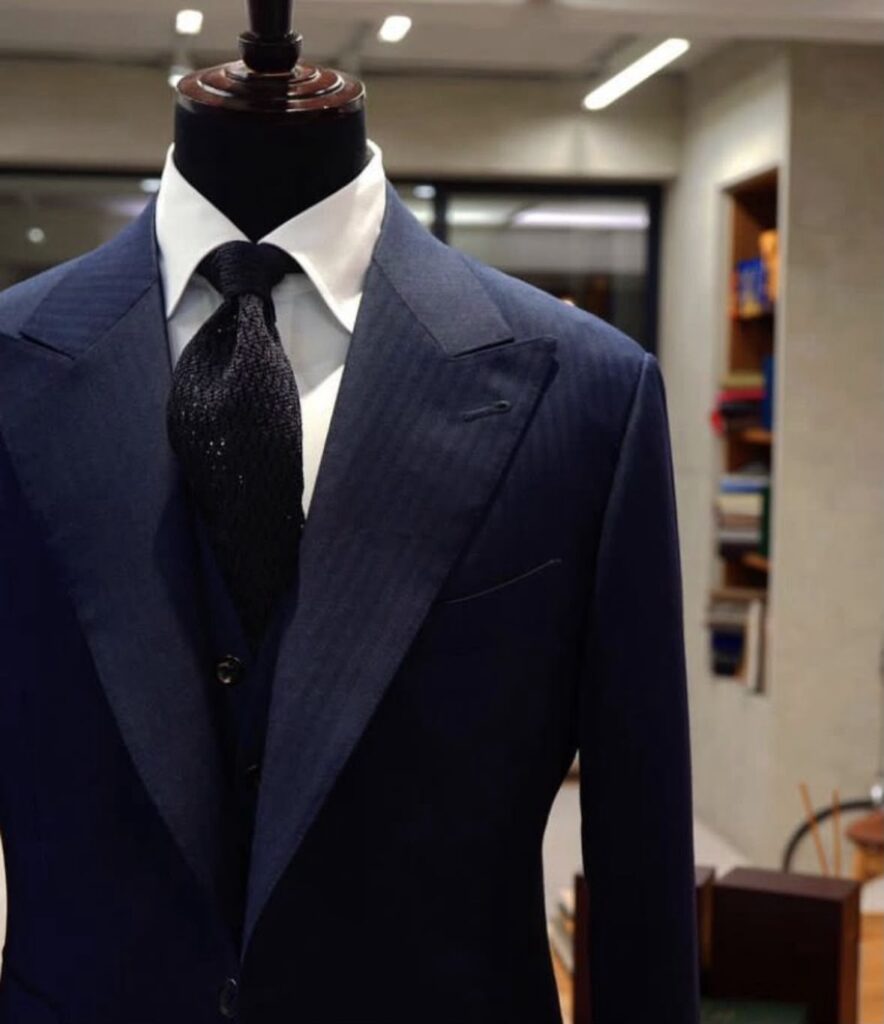
Most men buy suits reactively – a job interview comes up, a wedding invitation arrives, and suddenly there’s a frantic search for something appropriate. The result is a wardrobe full of near-misses: a navy suit that’s slightly too casual for formal occasions, a black suit that’s too severe for anything short of a funeral, and a gap where a versatile everyday suit should be.
Building a suit wardrobe the right way is about sequence. The suits every man should own aren’t about owning as many as possible, they’re about owning the right ones in the right order, so that each new addition multiplies what you can do with what you already have. This guide lays that sequence out clearly, from the single most important suit to own first, through to the pieces that round out a complete wardrobe.
Quick Answer: The Essential Suits Every Man Should Own
In order of priority: a navy suit first (the most versatile suit in menswear), followed by a charcoal grey suit (for formal and professional settings), then a mid-grey or light grey suit for daytime and warmer-weather occasions, and for Indian occasions specifically, a Bandhgala as the fourth essential. After these four are covered, a statement or seasonal suit rounds out the wardrobe for personal expression.
Why Sequence Matters When Building a Suit Wardrobe
Before listing individual suits, the most important principle is this: each suit you buy should expand the range of occasions your wardrobe can handle. A man with two well-chosen suits covers more ground than a man with five poorly chosen ones. The goal at every step is maximum versatility per addition.
This is also why starting with a statement suit – however tempting is the wrong move. A burgundy velvet suit is a wonderful thing to own, but only once the workhorses are already in the wardrobe. It has nowhere near the daily utility of a navy or charcoal suit, and it can’t substitute for either when the occasion is professional or formal.
Suit 1: The Navy Suit – Start Here, Always
The navy suit is the single most important suit in a man’s wardrobe, and the consensus on this is as close to unanimous as menswear gets. Navy is simultaneously versatile enough for a job interview, a business meeting, a casual dinner, and a semi-formal event – a range almost no other colour achieves.
Why navy works everywhere:
- It’s formal without being severe (unlike black)
- It photographs well in both natural and artificial light
- It pairs with almost every shirt colour – white, pale blue, pink, light grey, even subtle patterns
- It works with brown shoes as well as black, giving you two completely different looks from one suit
- It’s appropriate from late morning through to late evening
What to look for: A mid-weight worsted wool in a plain navy or very subtle texture such as a pick-and-pick or birdseye weave. Avoid shiny fabrics, they cheapen the suit’s appearance quickly. For Indian summer conditions, a tropical wool navy suit gives you the same versatility with better breathability. Our full guide to summer suit fabrics for India explains the difference in detail.
Fit: Slim or tailored fit with a moderate waist suppression. The navy suit should feel like the suit you reach for without thinking – it only does that if it fits perfectly.
Suit 2: The Charcoal Grey Suit – The Professional Workhorse
If navy is the most versatile suit in a wardrobe, charcoal grey is the most authoritative. It carries a level of formality and seriousness that navy doesn’t quite reach, making it the right choice for high-stakes professional settings, formal ceremonies and any occasion where the dress code leans toward the conservative.
Where charcoal grey works:
- Corporate environments and client-facing roles
- Formal weddings as a guest
- Official and civic occasions
- Evening events where black tie is not required but formality is expected
What to look for: A plain charcoal or a very fine chalk stripe in a mid-weight worsted wool. The chalk stripe adds visual interest without sacrificing the suit’s professional register. Pair with a white shirt and a silk tie for maximum authority, or wear without a tie for a more contemporary approach. Read our guide on fabric pairing in menswear for shirting and tie combinations that work with charcoal.
The charcoal vs. black question: Many men default to black as the formal suit, but charcoal grey is actually the more versatile of the two for most occasions. Black is appropriate for funerals and formal evening events, but it can look harsh in daylight and in most professional settings reads as slightly off. Charcoal gives you near-equivalent formality with significantly more versatility.
Suit 3: The Mid-Grey or Light Grey Suit – Daytime and Warm Weather
Once navy and charcoal are covered, the next gap in most wardrobes is a lighter suit for daytime events, outdoor occasions and warmer months. A mid-grey or light grey suit fills this role cleanly.
Grey in lighter shades from medium grey to a soft pearl – works particularly well for daytime weddings, summer outdoor events, and any occasion where the warmer-weather palette makes navy and charcoal feel too heavy.
Why this works in the Indian context: Mumbai and Thane summers are exactly the conditions where a lighter suit earns its place. A light grey in a linen blend or a fine tropical wool reads as considered and season-appropriate in a way that a dark suit simply doesn’t in June heat. Explore our full collection of made-to-measure suits to see fabric options suited to warm-weather wear.
Styling note: A mid-grey suit separates well, the jacket works as a blazer over dark trousers, and the trousers pair with navy or white shirts independently of the jacket. This multiplies the number of looks available from a single suit which makes it a high-value wardrobe addition. Learn more in our guide on linen suits for men if you’re considering a lighter fabric for this third suit slot.
Suit 4: The Bandhgala – The Indian Essential
For any man dressing for Indian occasions – festivals, formal family events, mehendi, sangeet, traditional ceremonies – a Bandhgala is not optional. It is the Indian equivalent of the Western dress suit: a garment that carries its own formality, requires no tie, and communicates a clear understanding of the occasion’s register.
The Bandhgala’s closed collar and structured silhouette make it appropriate across a wide range of Indian formal occasions without the Western suit’s requirement for specific accessories to complete the look. Paired with churidar trousers and the right footwear, it achieves a formality that rivals any Western suit.
For the full history, construction details, and styling guide, read our dedicated post: the Bandhgala – India’s definitive expression of structured elegance.
Suit 5: The Statement Suit – Once the Basics Are Covered
After the four essentials are in place, the fifth suit is where personal expression comes in. A statement suit defined by a bold colour such as bottle green, deep burgundy, or mustard, a strong pattern like windowpane or glen plaid, or an unusual fabric is the suit that makes you memorable at the right occasion.
The key word here is after. A statement suit worn in the absence of the workhorses above leads to the reactive wardrobe problem described at the start of this guide impressive for one occasion, useless for everything else. Once you have the first four, the fifth is a genuine addition that rounds out rather than replaces.
The Complete Wardrobe at a Glance
| Priority | Suit | Best Use | Fabric |
|---|---|---|---|
| 1 | Navy two-piece | Everything — the universal workhorse | Worsted wool or tropical wool |
| 2 | Charcoal grey | Professional, formal, evening | Mid-weight worsted wool |
| 3 | Mid or light grey | Daytime, warm weather, outdoor | Linen blend, tropical wool, or fine worsted |
| 4 | Bandhgala | Indian occasions, festivals, ceremonies | Wool, silk blend, or seasonal fabric |
| 5 | Statement colour or pattern | Special occasions, personal expression | Fabric to match the occasion |
What About Shirts and Jackets?
A suit wardrobe works best when the shirts and separate jackets around it are built with the same logic. A well-fitted formal shirt in white, pale blue, and one subtle pattern covers almost every shirting need across the suits above. For occasions where a full suit is too formal, a blazer or structured jacket worn over tailored trousers achieves a smart-casual register that a suit jacket alone can’t.
Frequently Asked Questions
How many suits does a man actually need? For most men who wear suits occasionally rather than daily, three well-chosen suits – navy, charcoal and one occasion-specific suit covers the vast majority of situations. For men in professional environments requiring daily suit wear, five to seven suits allows for rotation without over-wearing any single piece.
Should I buy a two-piece or three-piece suit first? A two-piece suit first. It’s more versatile the jacket works as a standalone blazer, which a three-piece waistcoat doesn’t. Add a three-piece later, once the two-piece wardrobe foundation is established.
Is black a good first suit? No. Black is too formal for most everyday professional and social occasions and too narrow in its application to serve as a true wardrobe workhorse. Navy gives you everything black offers in formal settings, plus versatility across casual and semi-formal occasions that black simply doesn’t provide.
How much should I spend on a suit? Enough to have it made well and fitted correctly. A mid-range made-to-measure suit that fits perfectly will serve you better and last longer than a premium off-the-rack suit that requires extensive alterations. For pricing and consultation, get in touch with the atelier directly.
What’s the difference between a slim fit and regular fit suit? Slim fit has more waist suppression and a tapered trouser – it creates a more contemporary silhouette. Regular fit has more ease through the chest and a straighter trouser leg.
The Final Word
The suits every man should own aren’t about filling a wardrobe – they’re about building one with intention. A navy suit first, a charcoal grey second, a lighter grey third, a Bandhgala for Indian occasions, and a statement suit once the foundation is set. Each addition multiplies what came before it.
If you’re starting from scratch or filling a specific gap, browse the full suits collection at Shubham Shinde Atelier or visit the About Us page to learn more about our made-to-measure approach. For a consultation, contact us and we’ll help you identify exactly which suit your wardrobe needs next.
