
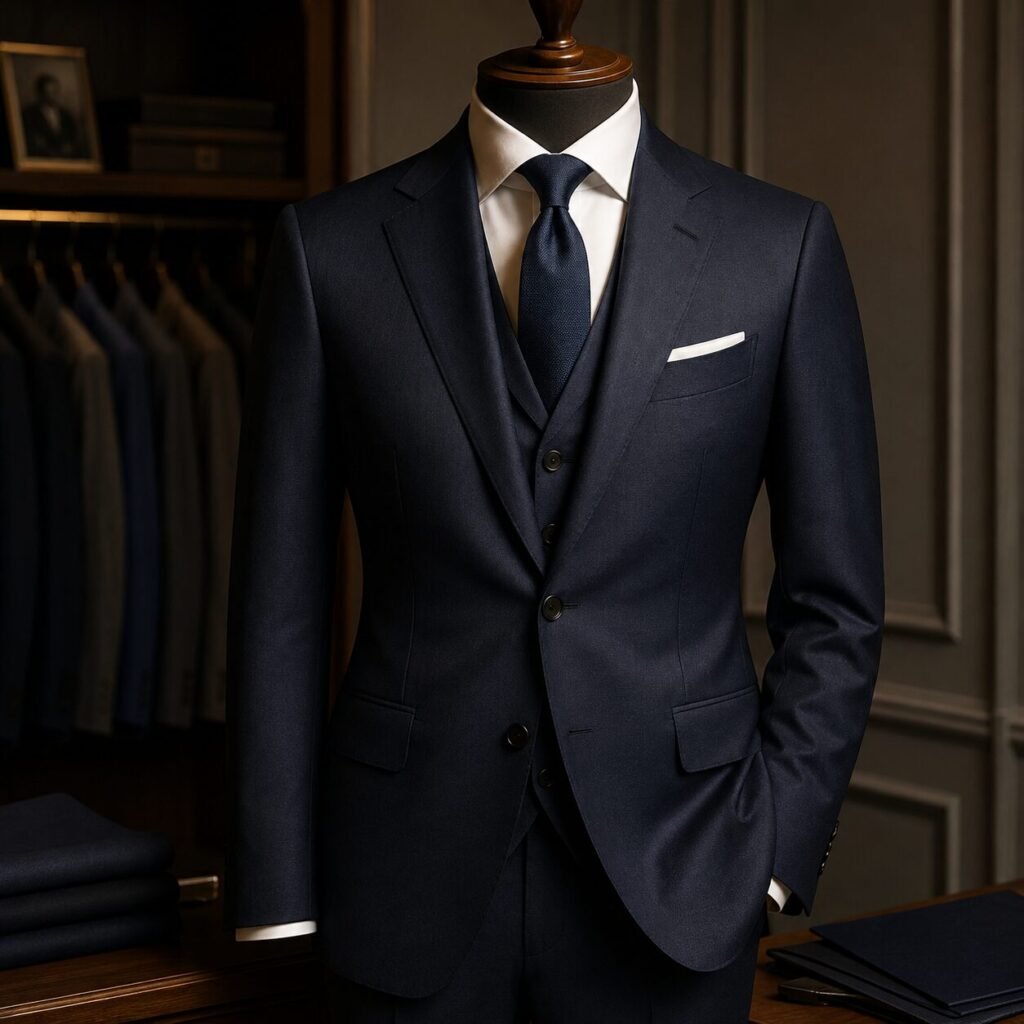
A suit is rarely just a suit.
The difference between a two-piece worn to a business meeting, a three-piece chosen for a wedding, a double-breasted jacket for an evening occasion, and a Bandhgala for a formal Indian celebration goes far beyond the number of buttons or layers. Each has its own purpose, proportion, level of formality, and visual language.
Understanding the types of suits for men makes it easier to build a wardrobe that works across occasions rather than accumulating suits that all serve the same purpose. The most useful way to approach suit styles is not simply by naming them, but by understanding when they work, how they should fit, what fabrics suit them, and how they can be made relevant to modern Indian menswear.
This guide breaks down the major suit styles worth knowing, from foundational two-piece tailoring to three-piece suits, double-breasted styles, tuxedos, Bandhgalas, and seasonal tailoring.
What Defines a Suit Style?
Before looking at individual styles, it helps to understand what actually changes from one suit to another.
A suit can vary according to its number of pieces, jacket construction, button configuration, lapel shape, silhouette, fabric, and intended formality.
For example, a two-piece and three-piece suit differ primarily because of the waistcoat. A single-breasted and double-breasted suit differ in their front construction and button arrangement. A tuxedo differs not simply because it is black, but because of details such as satin-faced lapels and trousers designed for black-tie dressing.
This distinction matters because the terms are often mixed together. A suit can simultaneously be a three-piece, double-breasted, wool suit with peak lapels.
So, rather than thinking of suit styles as completely separate categories, think of them as different elements that can be combined to create a particular look.
1. The Two-Piece Suit
The two-piece suit is the foundation of most men’s tailoring wardrobes.
It consists of a jacket and matching trousers, without a waistcoat. Its simplicity is precisely what makes it so versatile.
A well-cut navy or charcoal two-piece can move from the office to a formal dinner with relatively minor changes in the shirt, tie, and footwear.
When to Wear a Two-Piece Suit
A two-piece works particularly well for:
- Business meetings
- Interviews
- Weddings
- Formal dinners
- Conferences
- Professional events
For a first serious suit, the two-piece is difficult to beat because it offers maximum versatility.
The key is choosing a fabric and colour that do not restrict its use. A navy wool suit, for example, can be dressed conservatively for business or styled more expressively for an evening occasion.
For men building a formal wardrobe, Shubham Shinde’s suit collection offers a useful starting point for exploring structured tailoring and different silhouettes.
2. The Three-Piece Suit
A three-piece suit adds a waistcoat to the traditional jacket-and-trouser combination.
That additional layer changes the character of the entire outfit.
The waistcoat creates a continuous visual line through the torso and gives the wearer a more formal, composed appearance. It also provides an advantage at events where the jacket may occasionally be removed—the outfit still retains much of its intended structure.
When Should You Wear a Three-Piece Suit?
Three-piece suits are particularly effective for:
- Weddings
- Formal receptions
- Ceremonial occasions
- Evening events
- Traditional formal settings
Fabric and colour matter enormously here. A dark wool three-piece can appear distinctly formal, while a lighter fabric can create a more relaxed wedding look.
If you’re deciding between the two, our detailed comparison of 2-piece and 3-piece wedding suits can help you understand which works better for different wedding settings.
3. The Single-Breasted Suit
Among the different types of suits for men, the single-breasted suit is arguably the most versatile.
It features one column of buttons and a relatively clean front. Depending on the button stance, lapel width, shoulder construction, and cut, it can range from relaxed to highly formal.
The most common configurations include two-button and three-button jackets, with the two-button style remaining particularly adaptable to contemporary wardrobes.
Why Single-Breasted Suits Remain Essential
Their versatility makes them suitable for almost every man’s wardrobe.
A well-tailored single-breasted suit can work for:
- Corporate dressing
- Weddings
- Interviews
- Formal dinners
- Travel
- Everyday tailoring
The important consideration is not simply the number of buttons but the overall proportion of the jacket.
A narrow lapel, heavily suppressed waist, and short jacket create a very different impression from a broader lapel, natural shoulder, and longer silhouette.
4. The Double-Breasted Suit
A double-breasted suit has overlapping front panels and two parallel columns of buttons.
It creates a stronger silhouette than a conventional single-breasted jacket and has historically been associated with confident, formal dressing.
Modern double-breasted tailoring, however, does not have to look old-fashioned. Contemporary proportions, cleaner shoulders, and carefully balanced button placement can make the style remarkably sophisticated.
When to Wear a Double-Breasted Suit
Consider one for:
- Formal business settings
- Evening occasions
- Weddings
- Important social events
- Statement tailoring
The double-breasted jacket works particularly well when the wearer embraces its structure rather than trying to make it look like a single-breasted suit.
The lapels, button stance, and jacket length need to work together. Poor proportions can make the garment look bulky, while precise tailoring gives it authority.
5. The Tuxedo
A tuxedo occupies a different category from an ordinary formal suit.
Designed for black-tie occasions, the classic tuxedo is distinguished by details such as satin-faced lapels, matching satin detailing on the trousers, and formal evening accessories.
The traditional combination includes:
- Black or midnight navy jacket
- Matching trousers
- White dress shirt
- Bow tie
- Formal black footwear
A tuxedo is therefore not simply a “fancier black suit.”
Its purpose is specifically tied to evening formalwear and black-tie dress codes. Using a standard business suit in place of a tuxedo can make an outfit appear underdressed, particularly at events where black tie is explicitly requested.
For a detailed explanation of how formal dress codes differ, authoritative menswear guides such as are useful supplementary references.
6. The Bandhgala Suit
Few of the types of suits for men carry as much cultural character as the Bandhgala.
Recognised by its closed or stand collar and structured front, the Bandhgala occupies a distinctive position in Indian formalwear. It combines the discipline of tailoring with a silhouette deeply associated with Indian sartorial heritage.
It is particularly effective for:
- Weddings
- Receptions
- Formal Indian celebrations
- Diplomatic or ceremonial occasions
- Evening events
The beauty of the modern Bandhgala lies in its restraint. Rather than relying on heavy ornamentation, a beautifully cut Bandhgala can create impact through fabric, proportion, collar construction, and silhouette.
For a deeper look at its history, construction, fabrics, and styling, see The Bandhgala: India’s Definitive Expression of Structured Elegance.
7. The Linen Suit
A linen suit occupies the more relaxed end of tailoring while retaining the essential structure of a suit.
Linen is particularly suited to warm climates because of its breathability and lightweight nature. Its natural tendency to crease is not necessarily a flaw—it is part of the fabric’s character.
This makes linen particularly appropriate for:
- Summer weddings
- Destination weddings
- Daytime events
- Resort occasions
- Outdoor celebrations
Colours such as ivory, beige, stone, light blue, and muted earth tones work particularly well.
If you’re considering one for warmer months, our guide to linen suits for men covers fabric characteristics, styling, and occasions in greater detail.
8. The Tropical Wool Suit
For men who want the structure of wool without the heaviness associated with traditional winter suiting, tropical wool deserves attention.
Tropical wool uses lighter constructions and open weaves that encourage airflow while retaining the clean drape expected from wool tailoring.
This makes it particularly relevant for Indian conditions.
A tropical wool suit can be appropriate for:
- Summer business wear
- Weddings
- Formal daytime events
- Travel
- Warm-weather evening occasions
It also offers greater versatility than many casual summer fabrics because it can maintain a sharper silhouette.
Our article on why tropical wool is ideal for structured silhouettes explores this relationship between fabric and structure in greater detail.
9. The Business Suit
The business suit is less about a specific construction and more about purpose and restraint.
A business suit typically relies on conservative colours, subtle patterns, and versatile fabrics. Navy, charcoal, and restrained grey remain reliable choices.
The objective is not to make the suit the centre of attention. Instead, it should communicate professionalism while allowing the wearer to remain the focus.
For a professional wardrobe, prioritise:
Fit → Fabric → Versatility → Construction → Detail
A perfectly fitted navy suit in quality wool will generally prove more useful than a wardrobe filled with highly specific statement suits.
10. The Dinner Suit
A dinner suit sits between conventional formal tailoring and black-tie dressing.
Depending on the event and dress code, it may incorporate evening fabrics, satin details, richer colours, or distinctive textures.
Velvet dinner jackets, for example, can work beautifully for festive evening occasions, while a classic black tuxedo remains the safest option where black tie is explicitly required.
The important distinction is understanding the dress code before selecting the garment.
A sophisticated wardrobe is not about wearing the most formal garment available. It is about wearing the right level of formality for the occasion.
How Fit Changes the Appearance of Different Suit Styles
Knowing the different types of suits for men is useful, but understanding fit is even more important.
A two-piece, three-piece, or double-breasted suit can all look exceptional when correctly proportioned—and disappointing when they are not.
Pay particular attention to the shoulders.
The shoulder line should sit naturally without extending significantly beyond the wearer’s shoulders. The chest should allow comfortable movement without excessive fabric, while the waist should create shape without pulling at the buttons.
Trouser proportions matter as well. Excessively narrow trousers can make structured tailoring appear unbalanced, while trousers with excessive fabric can overwhelm a modern silhouette.
The goal is not simply to make a suit tight.
The goal is to create balance.
How Fabric Changes Suit Style
The same silhouette can look completely different depending on its cloth.
A dark worsted wool suit communicates authority. Linen creates relaxed sophistication. Tropical wool feels lighter and more adaptable to warm climates. Wool-silk blends introduce subtle lustre and are particularly effective for evening dressing.
This is why choosing a suit should never be reduced to selecting a colour.
Fabric influences:
- Drape
- Texture
- Breathability
- Formality
- Durability
- Seasonal suitability
For a deeper look at summer fabrics, explore wool vs linen vs cotton for suits in summer.
Building a Versatile Suit Wardrobe
You do not need ten different suits to dress well.
A carefully considered wardrobe can begin with three or four strong pieces.
First: Navy Two-Piece
This should be the foundation. It works across business, weddings, dinners, and formal occasions.
Second: Charcoal Suit
A charcoal suit provides a more formal alternative and works exceptionally well in professional environments.
Third: Wedding or Statement Suit
This is where you can introduce a three-piece suit, distinctive texture, richer colour, or a more expressive silhouette.
Fourth: Seasonal Suit
For an Indian wardrobe, this could be a tropical wool or linen suit designed specifically for warmer months.
From there, you can expand into double-breasted tailoring, Bandhgalas, tuxedos, and other specialised styles based on your lifestyle.
This approach is more effective than buying suits simply because a particular style is trending.
Why Construction Matters
Two suits can use the same wool and still perform very differently.
The internal construction determines how the jacket holds its shape and responds to the wearer’s body.
Fused Construction
Fused jackets use adhesive to join internal layers. They can provide an economical entry point into tailoring but generally do not develop the same natural drape as canvassed construction.
Half-Canvas
Half-canvas construction introduces a stitched canvas layer through the chest and lapels, helping the jacket mould more naturally while retaining structure.
Full-Canvas
Full-canvas construction uses a canvas interlining that extends through much of the jacket. With quality workmanship, it can provide exceptional drape, shape retention, and longevity.
Construction is therefore one of the details worth understanding before investing in premium tailoring.
Choosing the Right Suit for the Occasion
The easiest way to narrow down the different types of suits for men is to start with the event.
| Occasion | Suitable Style |
|---|---|
| Business meeting | Navy or charcoal two-piece |
| Wedding guest | Two-piece, three-piece or refined statement suit |
| Groom | Three-piece, Bandhgala or formal tailored suit |
| Black-tie event | Tuxedo |
| Summer wedding | Linen or tropical wool |
| Formal reception | Dark two-piece, three-piece or dinner suit |
| Cultural celebration | Bandhgala |
| Evening social event | Dark suit, double-breasted suit or dinner jacket |
The table is a starting point rather than a rigid rule. Dress codes, venue, time of day, season, and personal style should always influence the final decision.
Why Tailoring Makes the Difference
A suit can have an exceptional fabric and beautiful design and still fail if it does not fit its wearer properly.
This is where tailoring becomes central.
At Shubham Shinde Atelier, the emphasis is on creating garments around the individual rather than simply selecting a standard size. Fabric, proportion, structure, and personal preference all contribute to the final silhouette.
That approach is particularly valuable when choosing more distinctive styles such as a double-breasted suit, three-piece suit, or Bandhgala, where proportion becomes even more important.
The objective is not to make every man look the same.
It is to make the garment look as though it belongs naturally to the man wearing it.
Final Thoughts: Which Suit Should You Buy?
There is no single answer to which of the types of suits for men is best.
The right choice depends on your lifestyle.
If you’re buying your first suit, start with a versatile navy two-piece. If weddings dominate your calendar, consider a three-piece or a refined formal suit. If Indian formalwear is central to your wardrobe, a Bandhgala deserves serious consideration. For black-tie occasions, invest in a proper tuxedo. And if you live in a warm climate, tropical wool and linen can make tailoring considerably more comfortable.
The strongest wardrobe is not necessarily the largest one.
It is the one in which every suit has a purpose.
At Shubham Shinde Atelier, that philosophy translates into tailoring built around proportion, fabric integrity, craftsmanship, and longevity—creating suits intended to remain relevant long after a particular fashion cycle has passed.
Because ultimately, understanding suit styles is only the beginning.
The real art lies in choosing the one that belongs to you.
Frequently Asked Questions
What are the main types of suits for men?
The most important styles include two-piece suits, three-piece suits, single-breasted suits, double-breasted suits, tuxedos, Bandhgalas, linen suits, and seasonal wool suits.
Which suit should a man buy first?
A well-fitted navy two-piece suit is usually the most versatile first purchase. It can be styled for business, weddings, dinners, and other formal occasions.
Is a three-piece suit more formal than a two-piece?
Generally, yes. The waistcoat adds visual formality and makes the three-piece particularly suitable for weddings and ceremonial occasions. However, fabric, colour, construction, and styling also affect the overall formality.
Is a Bandhgala considered a suit?
In contemporary Indian menswear, the Bandhgala is commonly treated as a formal suit or tailored ensemble. Its defining feature is the closed or stand collar, which distinguishes it from conventional Western lapel jackets.
What is the best suit for Indian summers?
Lightweight tropical wool and linen are strong choices. Tropical wool is particularly useful when you want breathability while retaining a structured, formal silhouette.
Are double-breasted suits still fashionable?
Yes. Modern double-breasted tailoring has evolved considerably, with cleaner proportions and more wearable silhouettes. The key is getting the button stance, lapel width, jacket length, and fit right.
How many suits should a man own?
There is no universal number. A practical wardrobe can begin with a navy suit, a charcoal suit, a wedding or statement suit, and a lightweight seasonal option. Additional styles should reflect your lifestyle and occasions.
What makes a suit look expensive?
The most noticeable factors are usually fit, fabric quality, construction, proportion, and finishing details. A well-fitted suit with restrained detailing generally looks more refined than one relying on excessive embellishment.
Internal links included in this article
- Shubham Shinde’s suit collection → Suit category
- 2-piece and 3-piece wedding suits → Existing wedding-suit comparison article
- The Bandhgala: India’s Definitive Expression of Structured Elegance → Bandhgala article
- our guide to linen suits for men → Linen suit article
- why tropical wool is ideal for structured silhouettes → Tropical wool article
- wool vs linen vs cotton for suits in summer → Summer suit fabrics article
I have kept these links contextual rather than attaching them to the primary keyword, so the article doesn’t look artificially SEO-optimised. The classification of suit styles above also reflects the way current menswear guides distinguish two-/three-piece, single-/double-breasted, black-tie and other style dimensions.
