
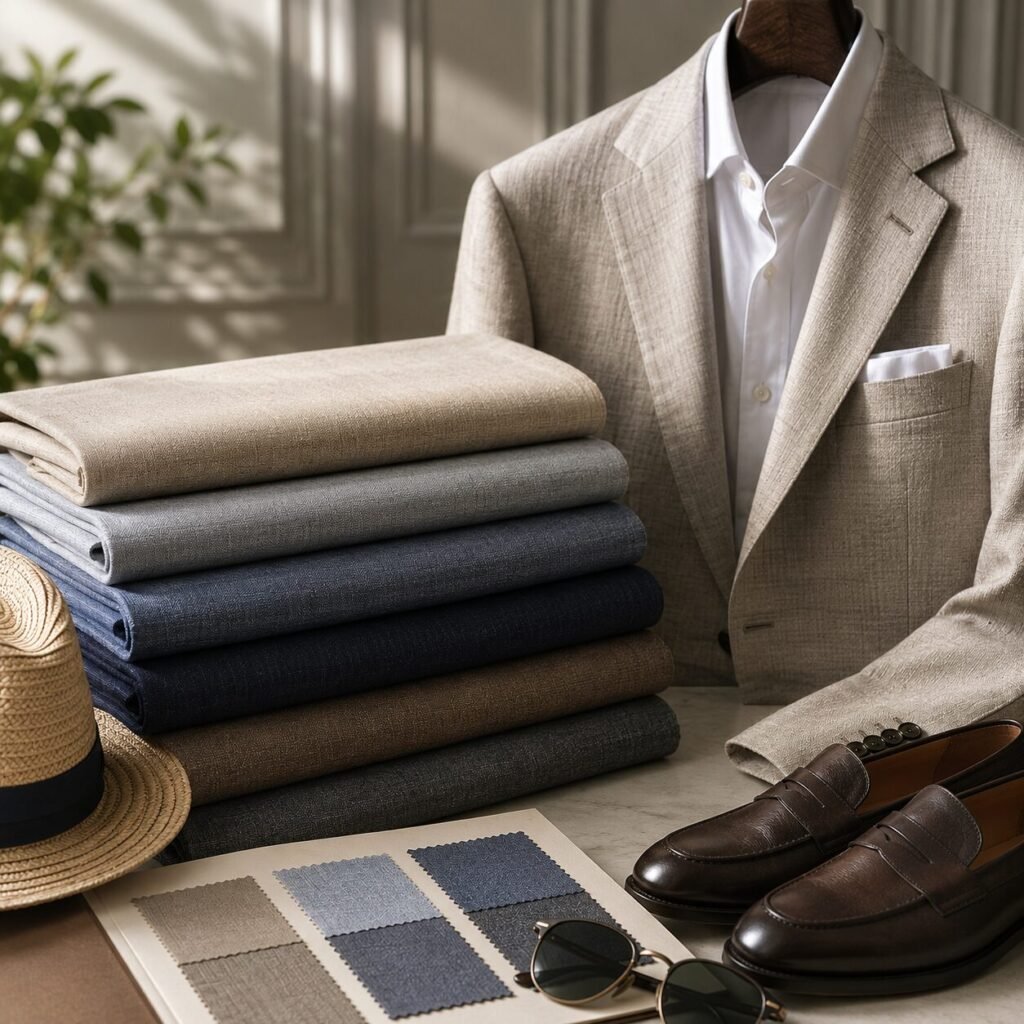
A suit gets the attention. The shirt makes it work.
It sits closest to the skin, frames the face, determines how the collar and lapels interact, and provides the visual transition between the jacket and the wearer. Yet when men build a formal wardrobe, the shirt is often treated as an afterthought: white, blue, slim fit, done.
That approach misses the point.
The best formal shirts for men are not simply shirts that look formal. They are pieces designed with enough precision to make the entire outfit feel more considered.
A collar that sits correctly can sharpen the face. A good fabric can give a jacket a cleaner fall. The right cuff can create the small glimpse of shirt that makes tailoring look intentional. Even the difference between crisp white and soft ivory can change the character of an entire suit.
In refined menswear, the details are rarely decoration.
They are construction.
A Formal Shirt Is More Than a White Shirt
White remains the most versatile colour in formal shirting for a reason. It works with navy, charcoal, black, brown and almost every traditional suit colour.
But formality is not determined by colour alone.
A formal shirt is defined by the relationship between fabric, collar, construction, fit and finishing.
A crisp cotton shirt with a structured collar can sit naturally beneath a tailored jacket. A softer shirt with a relaxed collar may be excellent for smart-casual dressing but feel underpowered beneath structured tailoring.
The difference becomes even more noticeable when the shirt is worn with a tie.
The collar needs enough presence to support the knot. The front should remain clean beneath the jacket. The cuffs should appear in proportion to the sleeve. Nothing should bunch unnecessarily around the waist or shoulders.
That is why the best formal shirts for men should be considered part of the complete outfit rather than as isolated garments.
The Collar Is Where the Outfit Begins
Look at a well-dressed man in a suit and your eyes naturally move toward his face.
That makes the collar one of the most important details of the shirt.
A collar frames the face and also interacts directly with the jacket’s lapel. Different collar shapes create different proportions, which is why there is no universally perfect collar.
The Spread Collar
The spread collar is one of the most versatile choices for formal dressing.
Its wider points create space for a tie knot and complement many contemporary suit silhouettes. It can work particularly well with medium and wider lapels because the proportions feel balanced.
The Semi-Spread Collar
More restrained than a full spread, the semi-spread is a strong everyday formal option.
It works well in professional environments and can transition easily between business and occasion dressing.
The Point Collar
The narrower, elongated points create a sharper visual line. It can work particularly well with slimmer tailoring and narrower ties.
The important consideration is not choosing the “most fashionable” collar.
It is choosing one that belongs to the proportions of the rest of the outfit.
Why Collar Construction Matters
Two shirts can have the same collar shape and still look completely different.
The reason is construction.
A structured collar can maintain a clean appearance beneath a suit, while softer constructions create a more relaxed roll. For formal dressing, collar construction becomes particularly important because it has to hold its shape around the neck while working with the jacket’s lapels.
This is one of those details that may not immediately be obvious to the wearer.
But it is visible in the final silhouette.
A collar that collapses underneath a jacket can make the entire outfit appear less precise. A collar that maintains its shape creates a cleaner frame around the face.
This is why craftsmanship matters even when the difference seems small.
White Isn’t the Only Colour Worth Owning
The traditional white formal shirt deserves a permanent place in a man’s wardrobe.
But stopping there would make the wardrobe unnecessarily predictable.
White
The ultimate formal foundation.
It works with almost every suit and is particularly effective for weddings, formal business occasions and evening dressing.
Light Blue
A softer alternative to white that remains highly formal.
It works exceptionally well with navy, charcoal and grey tailoring and can make business dressing feel less severe without becoming casual.
Ivory
Ivory introduces warmth and can work beautifully with brown, beige, cream and certain navy tailoring.
It is particularly effective when the objective is sophistication rather than strict corporate formality.
Subtle Stripes
Fine vertical stripes can add dimension without turning the shirt into the focal point.
The key word is subtle.
A formal shirt should support the tailoring around it rather than compete with the jacket.
Soft Pastels
Very restrained pink, lavender or muted blue can work for daytime events and contemporary formalwear when the rest of the outfit remains controlled.
The colour should complement the suit, not become the reason the outfit exists.
The Shirt and Suit Must Speak the Same Language
One of the easiest ways to improve formal dressing is to stop thinking about the shirt and suit as separate purchases.
They are a single visual composition.
Consider a navy suit.
A white shirt makes it classic. Light blue makes it slightly softer. Ivory makes it warmer. A fine stripe introduces pattern without disturbing the structure.
Now consider charcoal tailoring.
White creates strong contrast. Pale blue softens it. A subtle texture can introduce depth while maintaining formality.
This becomes even more important when dealing with premium fabrics.
A textured wool suit may benefit from a relatively clean shirt. A highly structured worsted suit can support a crisper formal shirt. A relaxed linen jacket generally works better with shirting that shares some of its informality.
The principle is simple:
Don’t make every element compete for attention.
If the suit is the statement, let the shirt provide the foundation.
Fabric Is Where Quality Becomes Noticeable
You can see a shirt’s colour immediately.
You often notice its fabric only after wearing it.
And that is precisely why fabric matters.
Premium shirting begins with the fibre and continues through yarn construction, weaving and finishing. Long-staple cottons can produce smoother, stronger yarns and are particularly valuable in refined shirting.
For a deeper look at how fibre quality, staple length and yarn count affect premium shirting, Egyptian and Giza cotton for bespoke shirting provides useful context.
Poplin
Smooth, crisp and clean.
Poplin works well when you want the shirt to have a polished, relatively smooth appearance beneath tailoring.
Twill
Twill has a subtle diagonal structure and generally offers more visual depth than a plain weave.
It can drape beautifully and is particularly effective for formal shirts where a slightly richer surface is desirable.
Oxford
Oxford cloth has a more noticeable texture and is generally more relaxed than classic formal shirting.
It can be excellent for smart-casual wardrobes, but the weight and construction should be considered carefully before pairing it with very formal tailoring.
Long-Staple Cotton
Long-staple cotton is particularly valuable in premium shirting because longer fibres can be spun into smooth, strong yarns. The result can be a cleaner surface and refined hand feel.
But higher fibre quality should not automatically be confused with “more formal.”
The right fabric is the one appropriate to how the shirt will be worn.
The Fit Should Be Precise, Not Restrictive
A formal shirt should follow the body without fighting it.
This sounds obvious, yet the modern obsession with slim silhouettes has created a common mistake: confusing a close fit with a good fit.
A shirt that pulls across the chest is not tailored.
It is simply too small.
A shirt that balloons around the waist is not relaxed elegance either. It is excess fabric that interrupts the clean line of the jacket.
The important areas are the collar, shoulders, chest, sleeves, cuffs and body length.
The collar should sit comfortably around the neck without choking or leaving excessive space. The shoulder seam should finish around the natural edge of the shoulder. The chest should allow movement without pulling at the buttons.
The goal is not to make the shirt disappear against the body.
The goal is to make it move with the body while maintaining its shape.
The Sleeve Is a Small Detail With a Big Effect
Put on a jacket and look at the wrist.
A small amount of shirt cuff should generally remain visible beneath the jacket sleeve.
Too little, and the jacket can appear oversized or the shirt can disappear completely.
Too much, and the relationship becomes visually awkward.
The shirt cuff should also sit comfortably around the wrist rather than sliding excessively over the hand.
This is especially important with tailored jackets because the cuff becomes part of the overall proportion.
A beautifully cut jacket with poorly fitting shirt sleeves can lose some of its precision.
This is why a formal shirt should be fitted with the jacket in mind whenever possible.
Formal Shirt Cuffs: The Detail That Changes the Mood
Cuffs don’t receive as much attention as collars, but they influence the formality of a shirt considerably.
Barrel Cuffs
Practical, versatile and appropriate for most business and formal situations.
They are ideal for a wardrobe designed around regular use.
French Cuffs
More ceremonial and traditionally associated with formal dressing.
They allow cufflinks to become part of the outfit, making them particularly effective for black-tie or highly formal occasions.
The choice should depend on the occasion.
A French cuff is not automatically more sophisticated simply because it is more formal.
The right level of formality is what creates sophistication.
When a Formal Shirt Doesn’t Need a Tie
A formal shirt does not always require a tie.
But wearing one without a tie does not automatically make an outfit contemporary.
If the collar is designed to support a tie, leaving the top button open should still produce a clean roll rather than a collapsed collar.
The rest of the outfit also needs to compensate.
If the tie disappears, the jacket, trousers, shoes and shirt become more visible. Fit and fabric therefore become even more important.
An open-collar white or light-blue shirt beneath a well-cut navy jacket can look exceptionally refined.
The same shirt beneath an oversized or poorly structured jacket can look unfinished.
The difference is not the absence of the tie.
It is the quality of everything around it.
Formal Shirts for Weddings, Business and Evening Dressing
The same shirt can have completely different personalities depending on what surrounds it.
For a business meeting, a crisp white or light-blue shirt with a conservative collar and navy or charcoal tailoring remains difficult to improve upon.
For a wedding, the same foundation can become more expressive through the suit fabric, pocket square, tie and accessories.
For an evening reception, a white shirt with a darker suit creates a clean contrast, while a tuxedo calls for a specifically formal shirt construction rather than an ordinary office shirt.
This is why owning fewer, better shirts can be more useful than owning a wardrobe full of similar pieces.
The shirt should have a role.
The Mistakes That Make a Formal Shirt Look Cheap
Luxury is often destroyed by small details.
A shirt can have expensive fabric and still look ordinary if the proportions are wrong.
Some of the most common problems include:
Excessively shiny fabric.
Artificial-looking sheen can make formalwear appear inexpensive rather than luxurious.
An oversized collar.
The collar should complement the face and jacket rather than dominate them.
An excessively tight fit.
Pulling across the chest or buttons is never a sign of good tailoring.
Poor sleeve length.
Too much shirt showing beneath a jacket can disrupt the silhouette.
Cheap buttons.
Buttons are small, but they sit at the centre of the garment and are surprisingly visible.
Overly complicated patterns.
Formal shirting usually benefits from restraint.
Visible undershirt lines.
The foundation layer should remain discreet beneath a refined shirt.
A collar that collapses.
Especially beneath tailoring, collar structure has a direct effect on the finished appearance.
The lesson is simple: quality is cumulative.
No single detail makes a shirt luxurious. Several small decisions made correctly create the effect.
Building a Formal Shirt Wardrobe
You don’t need twenty formal shirts.
You need the right foundations.
The White Shirt
Your most versatile formal piece.
Choose a high-quality cotton with a collar that works with your preferred tailoring.
The Light Blue Shirt
Essential for business and daytime dressing.
It gives you variation without moving away from formal territory.
The Ivory or Off-White Shirt
Particularly useful with warmer tailoring, brown accessories and certain wedding outfits.
The Fine Stripe
A subtle stripe provides pattern while remaining professional.
The Evening Shirt
A dedicated formal or tuxedo shirt is worth having if black-tie or highly formal events are part of your wardrobe.
From there, personal preferences can determine the additions.
A man who spends most of his time in business tailoring may need more blue and white. Someone attending frequent weddings may benefit from richer textures and softer colours.
The wardrobe should reflect the life being lived.
Why Shirting Fabric Deserves the Same Attention as Suiting
Men often spend considerable time selecting suit fabric while treating the shirt as a secondary purchase.
That hierarchy is understandable—the jacket is more expensive and visually dominant—but it overlooks how closely the two garments interact.
The shirt is the surface beneath the jacket.
Its collar affects the lapel. Its cuff affects the sleeve. Its fabric affects how the jacket feels around the neck and arms. Its colour affects the perceived depth of the suit.
This is why the philosophy behind premium bespoke shirting is ultimately similar to the philosophy behind fine suiting: the finished garment is only as good as the decisions made before it is cut and constructed.
At Shubham Shinde, that approach extends from the fibre and cloth to the final proportions of the garment.
The objective isn’t simply to produce a shirt that fits.
It is to create one that belongs to the wardrobe around it.
The Formal Shirt Should Make the Suit Better
The most successful formal shirts for men are rarely the ones that demand attention.
They make everything around them look better.
The collar frames the face.
The cuff completes the sleeve.
The fabric supports the jacket.
The colour establishes contrast.
The fit creates the foundation.
And when all of those details work together, the shirt stops looking like an accessory and becomes part of the architecture of the outfit.
That is the difference between simply putting on a formal shirt and wearing one properly.
At Shubham Shinde Atelier, this philosophy of considered tailoring extends beyond the suit itself. The emphasis is on proportion, fabric, construction and individuality—because a truly refined wardrobe is built through pieces that work together rather than compete for attention.
A well-made shirt may be one of the quietest garments in a man’s wardrobe.
But when every detail is right, quiet is exactly what makes it look expensive.
Frequently Asked Questions
What are the best formal shirts for men?
White and light-blue shirts are the most versatile foundations. From there, ivory, subtle stripes and carefully chosen evening shirts can add variety without compromising formality.
Which shirt colour is most formal?
White is generally the most universally formal option, particularly for business and evening dressing. However, formality also depends on the collar, fabric, construction and overall outfit.
What fabric is best for a formal shirt?
High-quality cotton is an excellent foundation. Poplin offers a crisp, smooth appearance, while twill provides more texture and drape. Long-staple cottons can be particularly desirable for premium shirting.
Should a formal shirt be slim fit?
Not necessarily. The shirt should follow the wearer’s body without excessive pulling or excess fabric. The best fit depends on body shape, posture and the silhouette of the jacket being worn over it.
Which collar is best with a suit?
Spread and semi-spread collars are versatile choices for tailored suits. The ideal collar depends on the wearer’s proportions, tie preference and the width of the jacket lapels.
Can you wear a formal shirt without a tie?
Yes. An open-collar formal shirt can work with tailored trousers or a jacket, provided the collar retains its shape and the rest of the outfit maintains a deliberate, polished appearance.
