
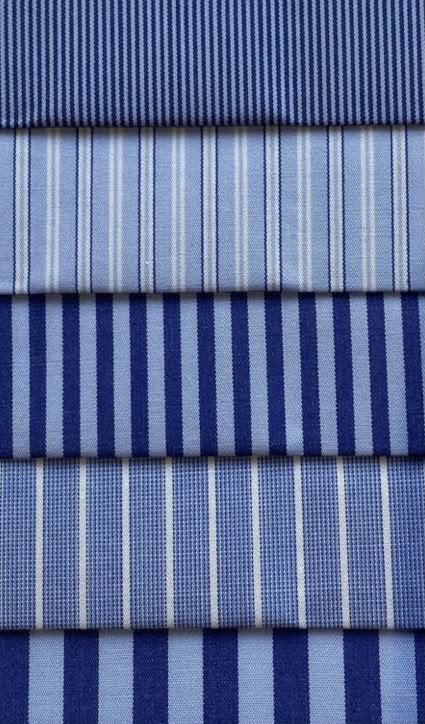
There is a particular kind of confidence that comes from wearing the right shirt not from the cut alone, not from the colour, but from the way the fabric settles against you. It doesn’t demand attention. It simply makes everything else look better. That quality isn’t accidental. It is woven in.
In the world of luxury bespoke shirts for men, the conversation almost always begins with the fabric, because the fabric decides everything else: how the shirt drapes from the shoulder, how it breathes through a long day, how it survives a decade of wearing without losing its character. Two names define that conversation at Shubham Shinde Atelier: Canclini and Fredalia. One has been weaving in the shadow of the Italian Alps since 1925. The other has quietly become the benchmark for premium Supima cotton and linen shirting in the bespoke trade. Both represent the same conviction that a shirt should be made from something worth making it from.
This guide is for the man who wants to understand what he is wearing, not just what it costs. It covers what separates exceptional shirting fabric from acceptable fabric, what Canclini and Fredalia each bring to the cloth, and what a bespoke shirt built from either should feel like from the first wear to the hundredth.
Quick Answer: What Makes a Luxury Bespoke Shirt Fabric Exceptional?
An exceptional luxury bespoke shirt fabric is defined by three things working together: the quality of the raw fibre – long-staple Egyptian cotton, Supima cotton or fine European linen – the precision of the weave, and the finishing treatments applied after weaving that determine softness, crease recovery, and longevity. Canclini delivers on all three through nearly a century of Italian mill expertise. Fredalia delivers through advanced fabric technology applied to premium natural fibres, with finishes like liquid ammonia treatment and easy-iron technology that make bespoke shirts genuinely easier to live in. Together, they represent the two ends of what premium shirting can be heritage-driven Italian elegance and performance-led Supima precision.
Why the Fibre Beneath the Shirt Decides Everything
Before a single thread is woven, the ceiling of what a shirt can be is set by the fibre it starts with. This is the part of shirt fabric most buyers never see and the part that separates a fabric that softens gracefully over years from one that pills, thins, and loses its colour within a season.
Egyptian cotton has been the benchmark of fine shirting for centuries. Its significance lies in staple length – the length of the individual cotton fibres before spinning. Long-staple Egyptian cotton, particularly rare varieties grown in the Nile Delta, produces fibres long enough to be spun into finer, stronger yarns that feel smoother against the skin, reflect light with a natural lustre, and resist pilling because fewer fibre ends protrude from the fabric surface. The result is a shirt that feels categorically different from one made with shorter-staple cotton – smoother to the touch, more luminous, and more durable under repeated wear.
Supima cotton – a trademarked variety of Pima cotton grown in the United States under strict quality controls is equally long-staple and equally premium. With individual fibre lengths of 38mm or longer compared to the 25 – 28mm of standard upland cotton, Supima produces yarns of exceptional softness and strength. Fabrics woven from Supima cotton are notably soft from the first wear, improve with washing rather than degrading, and hold colour exceptionally well through repeated laundering. Fredalia’s use of 100% Supima cotton as the foundation for their shirting collections is a deliberate choice – a specific claim about the quality floor their fabrics are built from.
Fine European linen behaves differently from cotton in every way that matters for warm climates. It absorbs moisture and releases it faster than any other natural fibre, it becomes softer and more refined with each wash, and it carries a natural texture that reads as effortlessly elegant in a way no synthetic can replicate. Fredalia’s Breeze collection, built from pure linen, captures exactly these properties – lightweight, breathable, and structured enough for the crisp collar and placket a bespoke shirt demands.
Canclini: A Century of Italian Shirting From Como’s Silk Country
The story of Canclini began over 80 years ago, founded in 1925 by Giuseppe Canclini as part of the silk industry in the Como area of northern Lombardy. Three generations later, it is still managed by the Canclini family from the same territory where it began. That continuity matters. In an industry increasingly driven by scale and speed, a family-owned mill entering its second century of production brings something that cannot be replicated: an accumulated sensibility about what great shirting fabric should feel like, built over decades of working with the same fibres, the same looms and the same exacting standards.
Canclini fabrics are made exclusively from compact single yarns and long-staple twisted yarns in pure Egyptian cotton and linen, which have undergone stringent tests from the harvesting of the raw material onward. The cotton is chosen specifically for its cleanness, gloss, and natural sheen with the rare very long staple Giza 45 cotton serving as a reference point for raw material quality. Giza 45 is among the finest cottons grown anywhere in the world, and Canclini’s anchoring of their quality benchmark to this cotton tells you precisely where in the fabric hierarchy they have placed themselves.
Canclini has produced fabrics for houses including Zegna, Giorgio Armani, Prada, and Dolce & Gabbana. For a bespoke shirt client, this is meaningful context – confirmation that the fabric on the atelier’s cutting table has already met the most demanding quality requirements in the fashion world before it reaches you.
What distinguishes Canclini in the bespoke shirting space specifically is their range and their willingness to experiment. Canclini consistently produces distinctive designs across both formal and casual registers, and was one of the first mills to offer a significant part of their shirting collection as cut lengths to bespoke makers which means the range available to a tailor working with Canclini is genuinely broader than most mills. From fine poplin plains and elegant twill weaves through to subtle jacquards and textured casual shirtings, Canclini allows for a level of fabric personalisation that off-the-shelf shirting simply cannot offer.
Canclini also holds OEKO-TEX Standard 100 certification independent verification that every component of the fabric, from fibre to dye to finish, meets strict human-ecological safety requirements. For a shirt worn directly against the skin through long days, this certification is not a peripheral detail.
Fredalia: Supima Precision Built for the Bespoke Trade
Where Canclini’s authority comes from nearly a century of Italian mill heritage, Fredalia earns its position through precision – a focused commitment to premium natural fibres and advanced finishing technology that makes their fabrics genuinely exceptional in daily wearability.
Fredalia’s foundation in 100% Supima cotton immediately places them apart from the broad middle of the shirting market. Supima cotton accounts for less than 1% of global cotton production – its quality is governed under strict association standards, which means when Fredalia builds a collection on this fibre, the raw material quality is set at an elite level from the very start.
But what sets Fredalia apart in the bespoke trade is not only the fibre – it is what happens to it after weaving. Fredalia fabrics undergo advanced finishing processes including:
- Liquid ammonia treatment — permanently restructures the cotton fibre at a molecular level for a silkier hand-feel, improved lustre, and enhanced wrinkle recovery
- Moist-cure technology — locks in shape retention and significantly reduces shrinkage across repeated washing
- Easy-iron finish — allows bespoke shirts to be maintained without intensive pressing, while retaining the crispness the shirt was built with
For the man wearing a bespoke shirt in a working professional context commuting, travelling, long hours in a meeting room – these finish properties are not luxuries. They are the difference between a shirt that looks sharp at 9am and still looks composed at 7pm.
Fredalia’s Collections: What Each One Is Built For
The CEO Collection is built for the most demanding formal and corporate contexts. Woven from 100% fine cotton with a non-iron finish, it delivers a sharp, long-lasting white that does not dull or grey with repeated laundering – a specific and meaningful property for men whose wardrobe depends on crisp white shirts looking genuinely crisp day after day. The CEO Collection is the natural choice for formal bespoke shirts intended for boardrooms, client meetings, and occasions where the shirt needs to perform exactly as it promises, every time.
The Corporate Line applies structural weaves – twill, herringbone, jacquard to Fredalia’s premium fibre foundation, producing professional shirts with considerably more visual personality than a plain weave. The structural weave adds texture and depth that reads as intentional rather than decorative, making it ideal for bespoke shirts that need to work across a full professional week without feeling repetitive.
Fredalia Breeze is their pure linen collection fine, lightweight, and designed specifically for warm climates. Breeze sits at the intersection of structure and breathability: enough body to hold the crisp collar and front placket a bespoke shirt requires, enough openness in the weave to make wearing it through a Mumbai afternoon genuinely comfortable.
Choosing Between Canclini and Fredalia: A Practical Guide
The choice between Canclini and Fredalia is not a ranking, it is a matching exercise. Both are exceptional. The question is what the shirt is for.
| Occasion and Need | Recommended Fabric | Why |
|---|---|---|
| Formal occasion, maximum elegance | Canclini Egyptian cotton (Giza range) | Unmatched natural lustre and drape from long-staple Egyptian cotton |
| Corporate and daily professional wear | Fredalia CEO Collection | Non-iron finish, long-lasting white, built for repeated daily wear |
| Formal with visual personality | Fredalia Corporate Line (twill or herringbone) | Structural weave adds depth while maintaining professional register |
| Indian summer and warm-weather occasions | Fredalia Breeze (pure linen) | Lightweight, breathable, and crisp enough for full bespoke construction |
| Casual sophistication | Canclini linen-cotton blend | Canclini’s broader range delivers relaxed elegance without sacrificing quality |
| Travel and multi-day wear | Fredalia Supima with easy-iron finish | Advanced finishes maintain appearance through movement and varied conditions |
For a broader look at how fabric choice plays out across your full wardrobe – suits, jackets, and shirts together see our guide to fabric pairing in menswear: wool, silk and linen.
What A Bespoke Shirt Should Actually Be: The Standard Canclini And Fredalia Set
A fabric this considered deserves a construction to match. At Shubham Shinde Atelier, the bespoke shirt process begins with the fabric choice not after it. Here is what the fabric decision unlocks across the shirt’s construction.
The collar. A stiff, uncomfortable collar is almost always a fabric problem as much as a construction problem. Canclini and Fredalia fabrics have enough body and natural recovery to hold a crisp collar through a full day without requiring heavy internal fusing that makes the collar feel rigid. The result is a collar that looks structured in photographs and still feels comfortable by 8pm.
The front placket. On a well-constructed bespoke shirt, the placket should lie completely flat without pulling or rippling. This requires precise grain alignment during cutting and a fabric with good dimensional stability that doesn’t shift after washing. Fredalia’s moist-cure and easy-iron finishes are built specifically for this stability.
The sleeve. The sleeve of a bespoke shirt should taper naturally from the shoulder through to the cuff, moving with the body rather than resisting it. Long-staple cotton fabrics like Canclini’s Egyptian cotton range have the natural softness and drape to achieve this without requiring additional softening treatments.
The cuff. A single or double cuff in premium shirting fabric carries the quality of the fabric into the most visible part of the shirt – the inch and a half that appears below a jacket sleeve. In Canclini and Fredalia fabrics, the cuff’s surface quality, lustre, and structural recovery are apparent at close range in a way that commodity shirting is not.
Browse our full range of bespoke shirts crafted in Canclini and Fredalia fabrics, or explore our complete made-to-measure suits collection at Shubham Shinde Atelier.
Why Shubham Shinde Atelier Partners With Both Mills
The decision to partner with Canclini and Fredalia was not about offering more options. It was about covering every dimension of what a bespoke shirt should be able to do.
Canclini provides the Italian heritage and Egyptian cotton range that serves formal, occasion, and the most elevated everyday shirting. Their depth of weave variety from clean plains to subtle jacquards means the fabric selection process can be genuinely tailored to the individual’s wardrobe, not defaulted to a standard choice.
Fredalia complements this with a different kind of excellence: advanced-finish Supima cotton built for professional realities – shirts that need to perform five days a week, travel without looking travelled, and maintain a standard of crispness that other premium fabrics cannot always deliver without careful maintenance.
Together, these two fabric houses cover the full spectrum of what bespoke shirting can be from the most formal Egyptian cotton plain to the most breathable linen Breeze shirt built for a Mumbai summer.
For a full consultation on fabric selection and shirt construction, visit our Contact page or learn more about our bespoke approach on the About Us page.
Frequently Asked Questions
What is the difference between Egyptian cotton and Supima cotton in a bespoke shirt? Both are long-staple premium cottons that produce finer, stronger, and smoother yarns than standard cotton. Egyptian cotton, particularly long-staple Giza varieties is prized for its natural lustre and silky drape, making it the first choice for formal and occasion shirts. Supima cotton is equally fine in staple length and is particularly noted for its exceptional softness from the first wear and its long-term colour retention. Canclini works primarily with Egyptian cotton; Fredalia’s foundation is 100% Supima cotton.
What does a liquid ammonia finish do to a shirting fabric? Liquid ammonia treatment permanently restructures the cotton fibre at a molecular level, resulting in a silkier hand-feel, improved lustre, better colour uptake, and significantly enhanced wrinkle recovery. It is a premium finishing step that not all fabric mills apply, and its effect on the wearing experience of a bespoke shirt is noticeable – particularly in how the fabric feels against the skin and how well it recovers its appearance after a full day of wear.
What is the best fabric for a bespoke shirt in Indian conditions? For formal and evening occasions: Canclini’s Egyptian cotton range offers unmatched elegance and wears comfortably in air-conditioned environments. For daily professional wear: Fredalia’s Supima Corporate line offers the structure and easy-care properties that make it highly practical in an Indian professional context. For summer and warm-weather occasions: Fredalia Breeze in pure linen is the clearest choice – breathable, crisp, and deliberately designed for warm-climate wearability. See also our guide on best summer suit fabrics for India for how fabric choice extends across the full outfit.
How long does a bespoke shirt in Canclini or Fredalia fabric last? With correct care – cool machine wash or hand wash, no tumble drying, light pressing or steaming – a bespoke shirt in premium long-staple cotton from either Canclini or Fredalia can be worn and washed hundreds of times without meaningful degradation. The quality of the fibre is precisely what allows this — long-staple cotton fibres do not break down and pill under repeated laundering the way shorter-staple fibres do.
Can I see fabric swatches before commissioning a bespoke shirt? Yes. At Shubham Shinde Atelier, fabric selection from our Canclini and Fredalia books is part of the consultation process. Contact us to arrange a fitting and fabric viewing session at the atelier.
How is a bespoke shirt different from a made-to-measure shirt? A bespoke shirt is built from a unique paper pattern constructed entirely to your individual measurements, with multiple fittings during the making process. A made-to-measure shirt starts from a base pattern that is adjusted to your measurements. Both produce a significantly better fit than off-the-rack, but a true bespoke shirt allows for more precise accommodation of individual body characteristics posture, shoulder slope, arm length, and collar preference that no base pattern can fully anticipate.
The Last Word On The First Layer
The shirt is the closest thing to your skin in a dressed outfit. It is the layer that touches you all day and frames everything worn over it. Choosing to have it made from Egyptian cotton processed by a family mill that has spent a century perfecting the weave, or from Supima cotton finished with liquid ammonia and easy-iron technology, is not an indulgence. It is the most rational decision in the wardrobe.
At Shubham Shinde Atelier, every luxury bespoke shirt begins with this conviction that the fabric is not the backdrop to the shirt, it is the shirt. Canclini and Fredalia are the two fabric houses that embody that conviction most completely.
Explore our bespoke shirts, browse the full made-to-measure range or get in touch to begin your fabric consultation at Shubham Shinde Atelier.
